
best meatloaf recipe moist easy is usually what people mean when they say, “I just want meatloaf that isn’t dry, doesn’t fall apart, and tastes like comfort food.” If that’s you, this guide keeps it simple: a reliable ratio, a few moisture insurance moves, and a bake plan that doesn’t require fancy gear.
Meatloaf can be surprisingly picky, not because it’s hard, but because small choices stack up, too-lean meat, too many crumbs, a rushed rest, or baking it in a way that steams instead of browns. The good news, most “meh meatloaf” problems have predictable fixes.
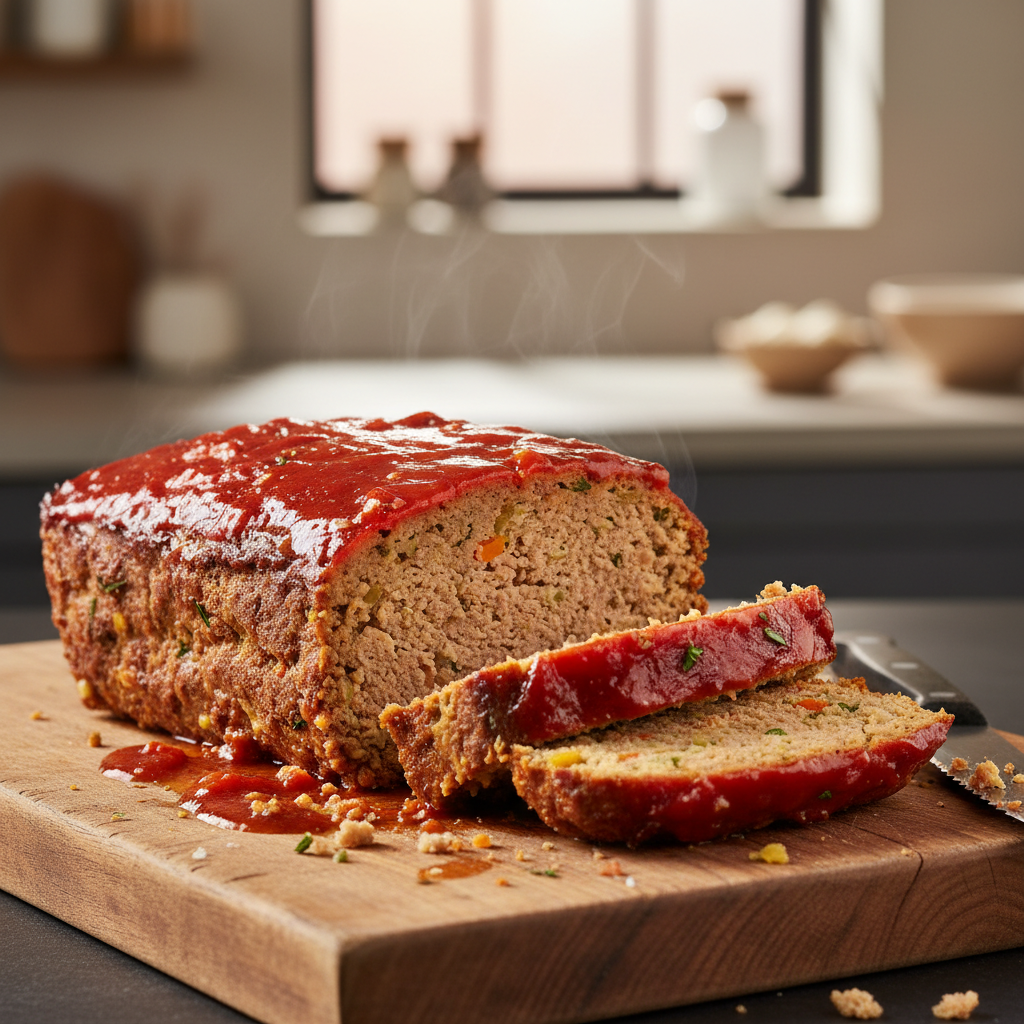
I’m going to give you a dependable base recipe, plus the “if this, then that” adjustments that experienced home cooks use without thinking. You’ll also get a quick doneness checklist, storage notes, and a glaze that balances sweet, tangy, and savory without tasting like candy.
What makes meatloaf dry (and how this recipe avoids it)
Dry meatloaf rarely comes from one mistake. It’s usually a couple of small things that team up.
- Meat is too lean: 90/10 beef can work, but it has less wiggle room. An 80/20 blend tends to stay juicier.
- Too much binder: Overdoing breadcrumbs or oats can make the loaf tight and “bready.”
- Overmixing: Working the mixture like dough develops a springy, dense texture that reads as dry.
- Overbaking: Carryover heat keeps cooking after you pull it out. If you wait for “looks done,” you often overshoot.
- Baking in a deep pan: It can steam in its own fat and juices, which sounds moist, but often turns the exterior soggy while the inside still overcooks.
According to USDA Food Safety and Inspection Service, ground beef should reach 160°F internal temperature for safety. That’s why using a thermometer matters here: you get safe meatloaf without guessing yourself into dryness.
The best easy moist meatloaf recipe (base formula)
This is the base I’d call “weeknight dependable.” It’s also flexible, you can swap the seasoning profile without breaking the texture.
Ingredients (serves about 6)
- 2 lb ground beef (ideally 80/20; 85/15 also works)
- 1 small onion, finely grated or minced
- 2 cloves garlic, minced
- 2 large eggs
- 3/4 cup plain breadcrumbs (or panko, lightly crushed)
- 1/2 cup milk (or buttermilk)
- 2 tbsp Worcestershire sauce
- 1 tbsp ketchup (inside the loaf)
- 1 1/2 tsp kosher salt
- 1 tsp black pepper
- 1 tsp smoked paprika (optional but helpful)
- 2 tbsp chopped parsley (optional)
Quick glaze
- 1/2 cup ketchup
- 2 tbsp brown sugar
- 1 tbsp apple cider vinegar (or white vinegar)
- 1 tsp Dijon mustard
- Pinch of black pepper
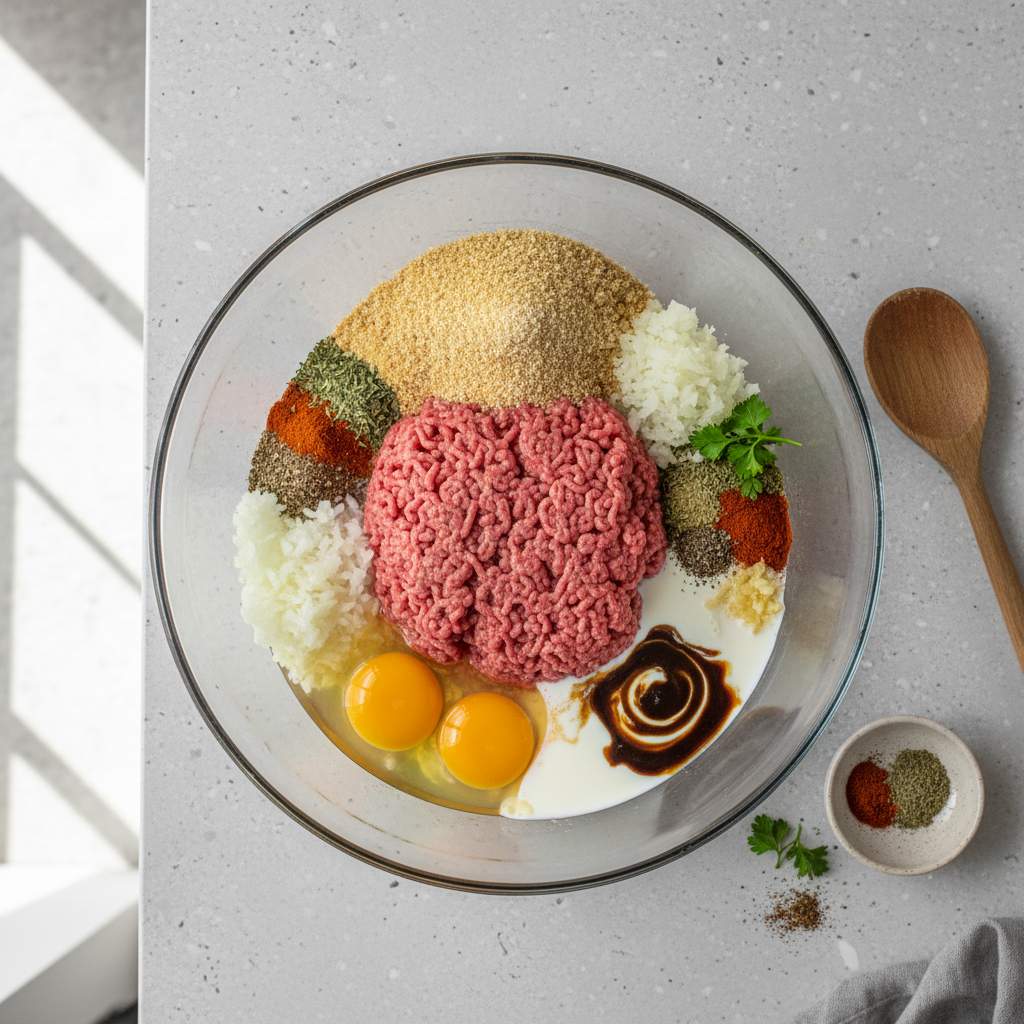
Steps
- Heat oven: 350°F. Line a sheet pan with foil and set a wire rack on top if you have one.
- Make a panade (moisture trick that actually matters): In a bowl, stir breadcrumbs and milk, let sit 3–5 minutes until slushy.
- Mix gently: Add beef, eggs, onion, garlic, Worcestershire, ketchup, salt, pepper, and paprika. Mix with your hands just until combined. Stop when it holds together.
- Shape: Form a loaf about 9x5 inches. Place on rack (or directly on the lined pan).
- Glaze: Stir glaze ingredients, brush half on top.
- Bake: 45 minutes, brush remaining glaze, then bake 10–20 minutes more until center hits 160°F.
- Rest: 10–15 minutes before slicing. This is where the juices redistribute, and slices hold.
If you’re searching for the best meatloaf recipe moist easy, the panade + gentle mix + thermometer combo is the real “secret,” not a long ingredient list.
A quick doneness and “is this going wrong?” checklist
Meatloaf gives you a few signals. Use these to avoid last-minute panic.
- Temp: 160°F in the center. Check in two spots if your loaf is thicker on one end.
- Texture: When pressed lightly, it feels set but not rock-hard.
- Juices: Some juices at the edges are normal. Pools of grease usually mean the meat mix was very fatty or it baked in a pan that trapped fat.
- Cracks on top: Small cracks happen, especially with lean beef. Big splits can mean overbaking or too few binders.
- Falling apart when sliced: Often slicing too soon, or not enough binder/egg, or onion pieces too large.
Moisture strategies, ranked (what to change first)
Some tweaks matter more than others. If your past loaves ran dry, start here.
- Choose a better fat ratio: 80/20 beef is forgiving. If you prefer leaner, consider mixing 90/10 with ground pork or turkey thigh for balance.
- Don’t skip the panade: Breadcrumbs soaked in milk hold moisture and soften the crumb.
- Grate the onion: Minced onion is fine, but grated onion distributes moisture and flavor more evenly.
- Stop overmixing: Mix until it barely comes together, then shape. Overworked meat turns tight.
- Use a sheet pan + rack: Better airflow, better browning, less steaming.
One more thing people underestimate: a 10-minute rest. Cutting hot meatloaf is basically asking the juices to run out onto the board.
Easy variations that still stay tender
You can keep the same structure and change the personality.
Flavor swaps
- BBQ-style: Use BBQ sauce in the glaze, keep a splash of vinegar so it doesn’t go flat.
- Italian-ish: Swap Worcestershire for a bit of soy sauce, add oregano and grated Parmesan, glaze with marinara mixed with ketchup.
- Spicy-sweet: Add chipotle powder and a teaspoon of honey in the glaze.
Ingredient swaps (with guardrails)
- Oats instead of breadcrumbs: Use quick oats, same volume, and still soak in milk.
- Milk alternatives: Unsweetened dairy-free milk works in many cases, though the texture can be slightly different.
- Add-ins: Keep add-ins (cheese, chopped peppers, mushrooms) to about 1 cup total so the loaf still binds.
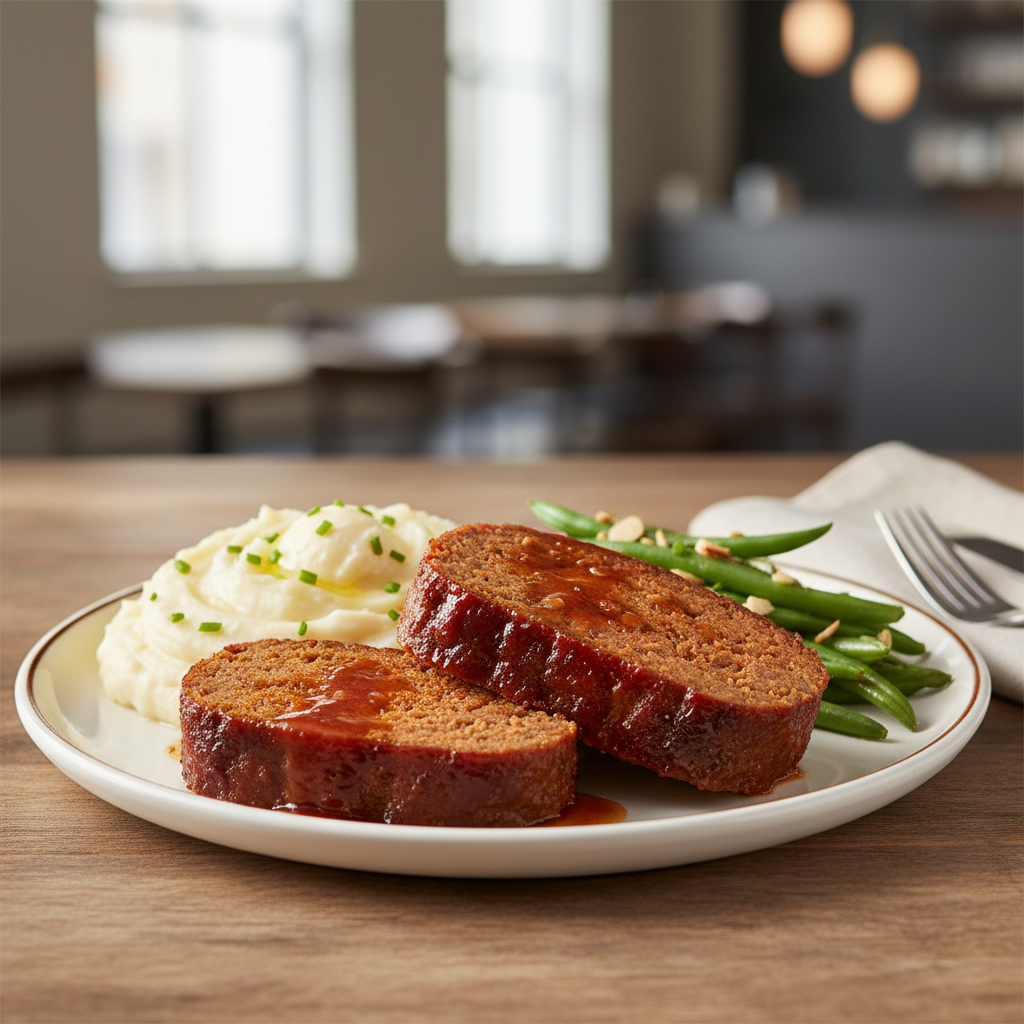
Time, temperature, and pan choices (with a practical table)
Bake time depends on thickness more than weight, which is why shaping matters.
| Loaf size & setup | Oven temp | Typical bake time | Notes |
|---|---|---|---|
| 2 lb free-form on sheet pan | 350°F | 55–70 min | Browns well, less steaming |
| 2 lb in 9x5 loaf pan | 350°F | 60–75 min | Drain fat carefully, edges can steam |
| Mini loaves (4 x ~8 oz) | 350°F | 25–35 min | Great for meal prep, more glaze surface |
Key point: Pull when the center hits 160°F, then rest. If you keep baking “just in case,” you’ll undo all the moisture work.
Storage, reheating, and make-ahead tips
Meatloaf is one of those dinners that can taste even better the next day, if you store it right.
- Fridge: Cool, wrap tightly, refrigerate. Many households use it within 3–4 days.
- Freezer: Freeze slices with parchment between them, then bag. Thaw overnight in the fridge for easier reheating.
- Reheat without drying: Add a spoon of water or broth to the pan, cover with foil, warm at 300°F until hot. Microwave works too, but cover and use medium power.
- Make ahead: Mix and shape the loaf, cover, refrigerate up to a day, then bake. Add glaze right before it goes in.
If you’re chasing the best meatloaf recipe moist easy for meal prep, mini loaves tend to reheat more evenly and stay tender.
Conclusion: the simple path to moist, easy meatloaf
If your goal is comfort food that feels reliable, focus on the parts that pay off: a forgiving meat blend, breadcrumbs soaked in milk, gentle mixing, and baking to temperature instead of guessing. Everything else is optional personality.
Action steps: pick 80/20 beef, use a thermometer, and commit to the rest time before slicing. Do that, and your next loaf has a very good chance of landing in the “make it again” category.