
Indian food recipes feel intimidating for a lot of Americans because the flavor seems “complex,” the ingredient list looks long, and many recipes assume you already know the basics like tempering spices or cooking lentils.
The good news, classic Indian home cooking is usually simple once you understand a few building blocks, one good pot of lentils, one reliable chicken curry, and a couple of sides can cover a week of meals without turning your kitchen into a spice lab.
Below you’ll find a practical set of starter recipes, plus a small system for shopping, prep, and heat control, so you can cook confidently even if you’ve never bought garam masala in your life.
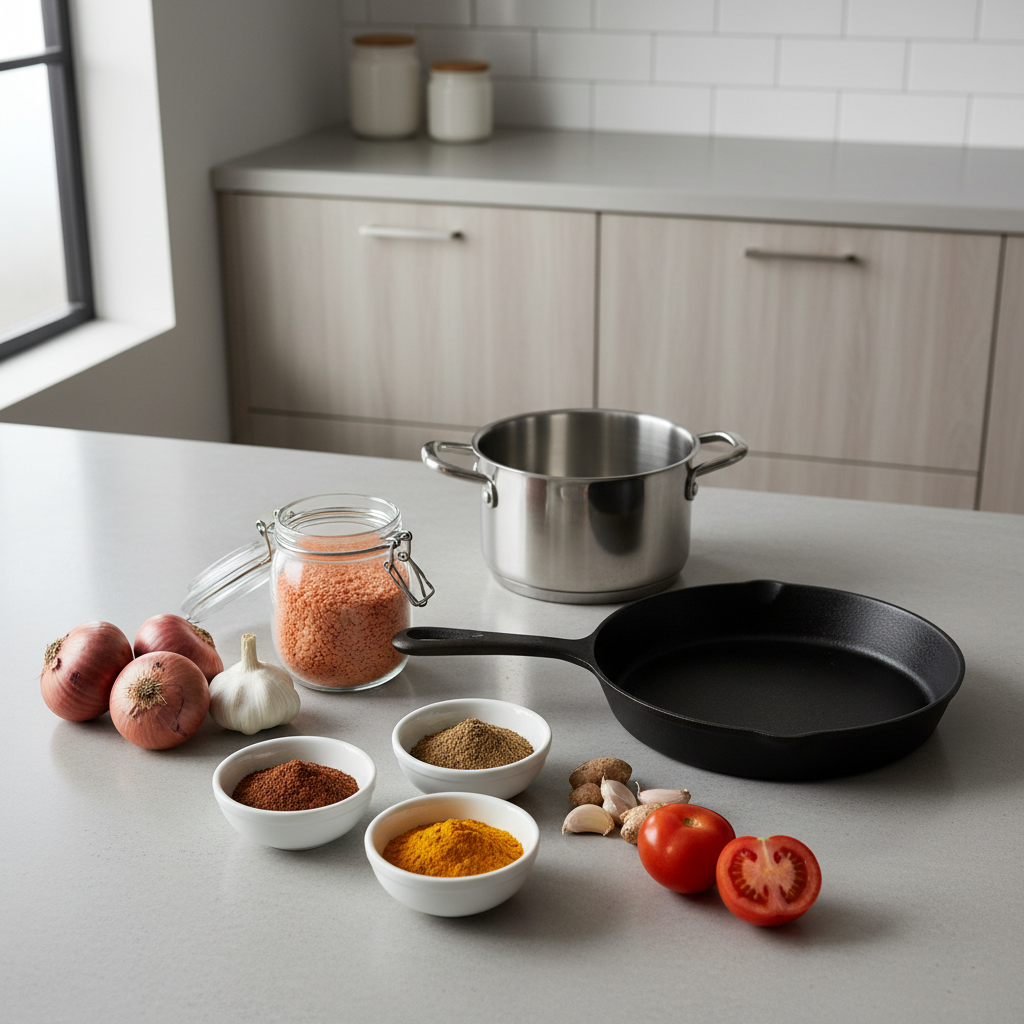
Key takeaways: start with a short spice list, build one “base masala” (onion-tomato-spice mixture), and aim for weeknight-friendly dishes that reheat well.
What makes classic Indian cooking “work” (without being complicated)
A lot of the flavor comes from technique, not from owning 40 jars. Once you get these right, many indian food recipes start to feel familiar.
- Blooming spices: warming whole or ground spices in oil or ghee for 20–60 seconds to wake up aroma, don’t walk away, they can burn fast.
- Base masala: onions cooked until golden, then garlic/ginger, then tomatoes and spices until the mixture looks thicker and less watery.
- Layered heat: mild chili early for warmth, fresh chili later for punch, and “cooling” ingredients like yogurt on the side.
- Time in the pot: lentils and curries often taste better after a short rest, leftovers are a feature, not a compromise.
According to the USDA..., basic food safety still applies here: keep raw poultry separate, cook chicken thoroughly, and refrigerate leftovers promptly.
A simple starter pantry (American grocery friendly)
You can do a lot with a tight list. If you buy only a few things, start here, then expand as you discover what you actually cook.
Essential spices (buy small containers first)
- Cumin (ground and/or seeds)
- Turmeric
- Coriander (ground)
- Garam masala (a blend, varies by brand)
- Kashmiri chili powder or a mild chili powder for color and gentle heat
Core ingredients
- Onions, garlic, ginger (fresh or paste)
- Canned crushed tomatoes or tomato puree
- Red lentils (masoor dal) or yellow split peas
- Basmati rice
- Plain yogurt (whole milk tends to behave better in heat)
- Neutral oil, plus ghee if you like the flavor
Reasonable swaps: no ghee, use butter plus a neutral oil; no Kashmiri chili, use paprika plus a pinch of cayenne; no fresh ginger, use ginger paste in a jar.
5 classic indian food recipes that stay simple
These are intentionally “starter” versions, the point is repeatability. Once you make them twice, you’ll start riffing naturally.
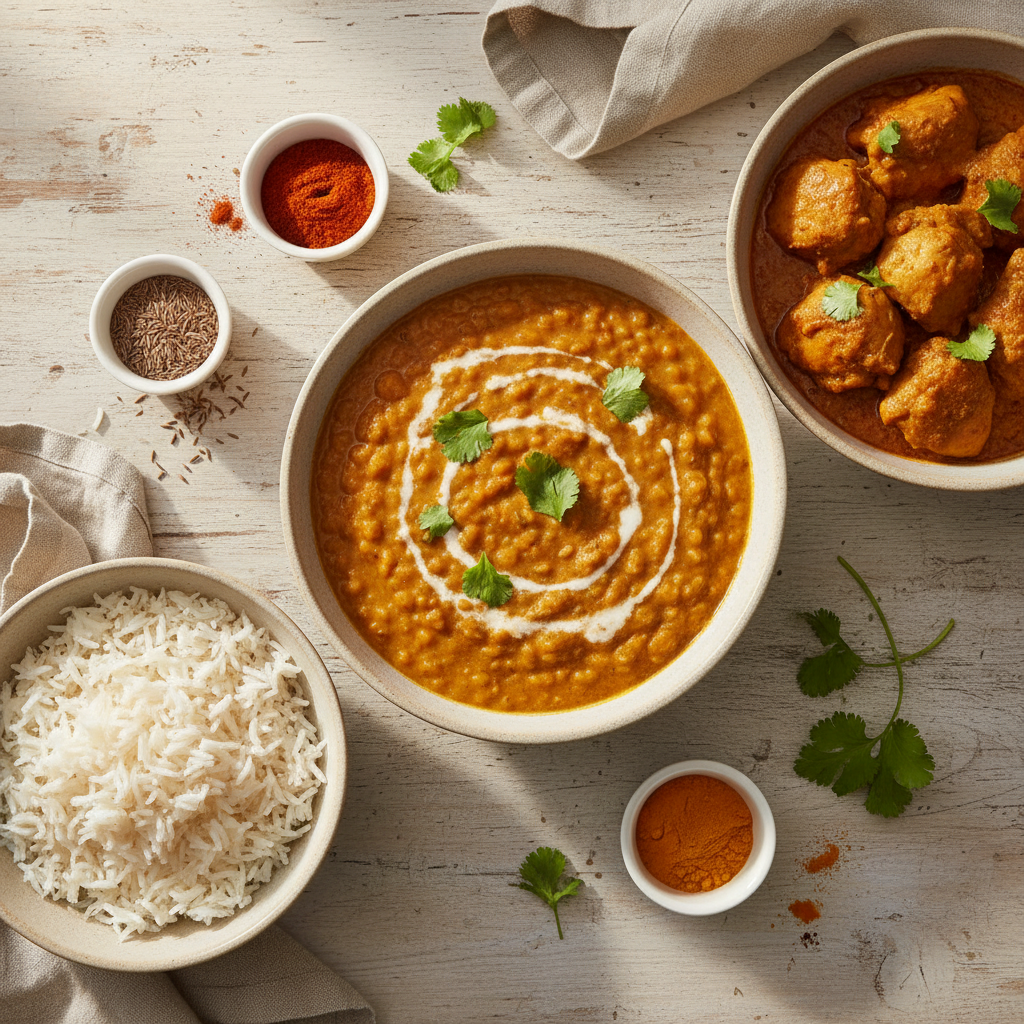
1) Masoor Dal (red lentil stew)
This is the comfort food gateway. Red lentils cook fast and forgive small mistakes.
- Cook: rinse 1 cup red lentils, simmer with 3 cups water, 1/2 tsp turmeric, and salt until soft (15–20 min).
- Temper: heat 2 tbsp oil or ghee, add 1 tsp cumin seeds (optional), then garlic and a pinch of chili, pour into the dal.
- Finish: add lemon juice and cilantro if you have it, adjust thickness with water.
If you want it richer, whisk in a spoon of butter at the end, it’s not “traditional,” but it works for weeknights.
2) Simple Chicken Curry (tomato-onion base)
This version avoids hard-to-find ingredients and still tastes like a real curry, because the base gets cooked down properly.
- Sauté 1 chopped onion in oil with a pinch of salt until golden.
- Add 1 tbsp ginger-garlic paste, cook 30 seconds.
- Add 1 cup crushed tomatoes plus 1 tsp cumin, 1 tsp coriander, 1/2 tsp turmeric, chili to taste, cook until thick and glossy.
- Add chicken pieces, stir to coat, add a splash of water, simmer until cooked through.
- Turn off heat, stir in 1/2 tsp garam masala, rest 5 minutes.
According to the CDC..., use a food thermometer when you’re unsure, chicken should reach a safe internal temperature; if you have health concerns, ask a qualified professional for guidance.
3) Aloo Jeera (cumin potatoes)
When people say “Indian food takes forever,” this is the counterexample. Great for meal prep, great in tacos too.
- Boil or microwave cubed potatoes until just tender.
- In a skillet, heat oil, add cumin seeds (or ground cumin), then potatoes.
- Season with turmeric, salt, optional chili, and finish with lemon.
4) Cucumber Raita (cooling yogurt side)
Raita is your heat-control lever. Too spicy, add raita, the meal becomes forgiving.
- Mix plain yogurt, grated cucumber, salt, and a pinch of cumin.
- Add chopped mint or cilantro if available.
If yogurt tends to curdle for you in hot dishes, keep it as a side, not stirred into the pot.
5) Jeera Rice (cumin rice)
Basmati changes the whole experience, and the cumin makes it smell “restaurant-like” with almost no effort.
- Rinse basmati until water runs mostly clear, soak 10 minutes if you remember.
- Toast cumin seeds in a bit of oil, add rice and water, cook like usual.
Quick self-check: which cooking issue do you actually have?
Most frustration comes from one of these, and each has a different fix.
- “My curry tastes flat.” Usually the onion-tomato base didn’t cook long enough, or salt is low.
- “It tastes bitter.” Spices likely burned during blooming, lower heat and shorten that step.
- “Too spicy.” Use milder chili powder, add raita, and avoid adding fresh chili early.
- “Watery sauce.” Simmer uncovered, or reduce tomatoes next time.
- “Everything tastes the same.” Add acid at the end (lemon), use garam masala late, vary texture with a crunchy side.
A practical cooking plan (30–60 minutes, real life friendly)
If you want Indian flavors without thinking hard after work, this routine is hard to beat.
Step-by-step
- Day 1: make masoor dal + jeera rice, store portions.
- Day 2: make chicken curry using the same onion-tomato approach.
- Add a fast side: aloo jeera or cucumber raita based on mood and heat tolerance.
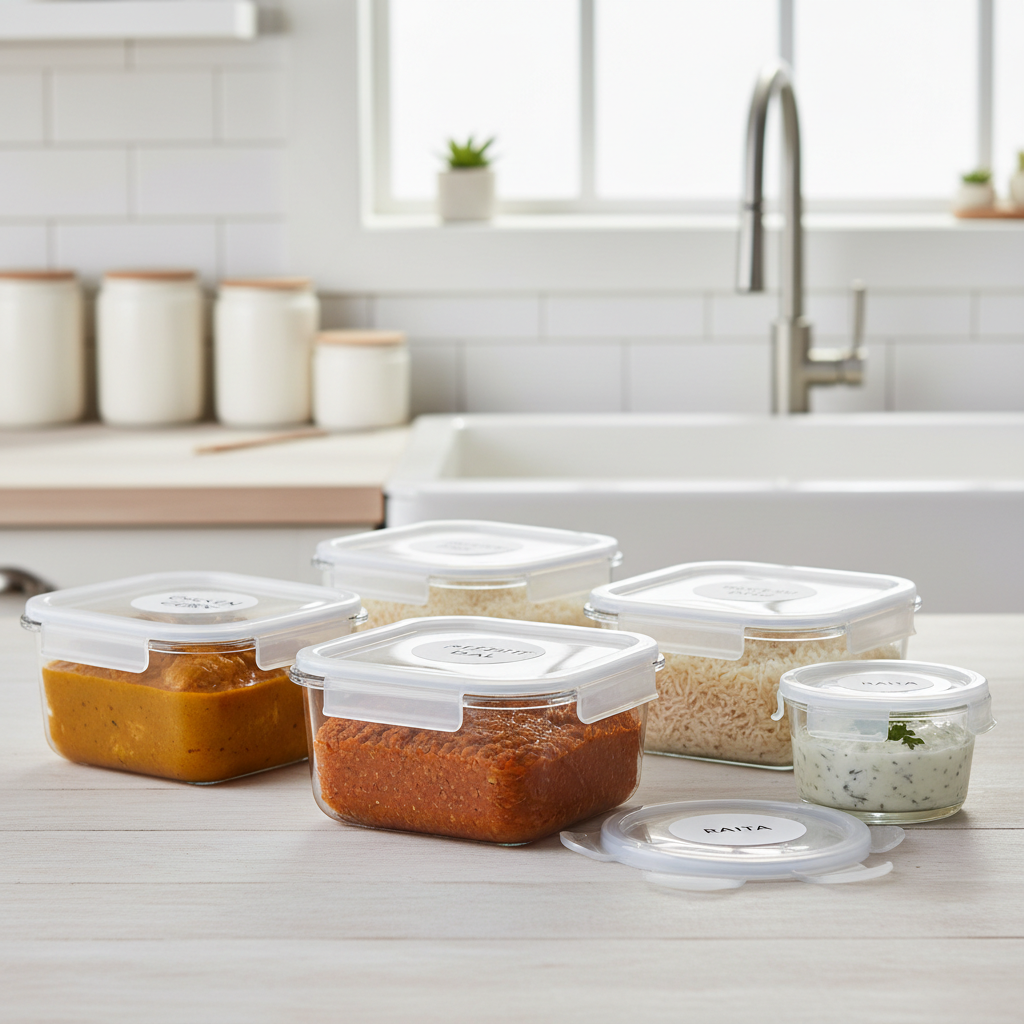
Many indian food recipes reheat well, but aim to store rice and curry separately so textures stay nicer.
Classic ingredients: what they do (so you can improvise)
Once you know the role of each ingredient, you stop following recipes word-for-word and start cooking.
| Ingredient | What it adds | Easy substitute |
|---|---|---|
| Cumin | Warm, toasty backbone | Caraway (different, but workable) |
| Turmeric | Earthy color and depth | None, just skip |
| Coriander | Light citrusy roundness | A little ground cumin plus lemon later |
| Garam masala | Finish aroma, “complete” taste | Small pinch cinnamon + clove (go easy) |
| Yogurt | Cooling, tang, tenderness | Sour cream (thinned), or keep as side |
Common mistakes that waste your time (and how to avoid them)
- Cooking spices on high heat: medium heat is safer, your nose should smell toasted, not burnt.
- Adding garam masala too early: it’s mostly aroma, add near the end so it stays lively.
- Skipping salt until the end: season in layers, especially the onion base.
- Buying every spice at once: start small, older spices lose punch and make food taste dull.
- Over-correcting with sugar: if tomatoes taste sharp, try longer simmering or a bit more fat first.
When it’s worth getting extra help
If you’re cooking for someone with food allergies, sodium restrictions, or a medical diet, it’s smart to check with a registered dietitian or clinician, Indian cooking can be very adaptable, but some swaps change nutrition and tolerance.
If your spice tolerance is unpredictable, keep heat low and use raita, then adjust gradually over a few meals rather than trying to “nail it” on the first night.
Conclusion: keep it classic, keep it repeatable
The easiest way to enjoy indian food recipes at home is to pick a few classics, learn the onion-tomato base, and let repetition do the heavy lifting, after that, new dishes stop feeling like a whole new project.
Action ideas: choose one dal and one curry to repeat this week, then add a single new spice next grocery trip based on what you missed most.
FAQ
What are the easiest indian food recipes for complete beginners?
Masoor dal, jeera rice, and cucumber raita usually work well because they’re forgiving, fast, and teach you the core moves without too many ingredients.
Do I need a special spice blend to make Indian food taste authentic?
Not always. Garam masala helps, but a lot of “authentic” flavor comes from cooking onions and tomatoes long enough and seasoning in layers.
Why does my curry taste watery even when I follow the recipe?
Often the tomatoes and onions didn’t reduce enough, or the pan stayed covered. Simmer uncovered and let the sauce thicken before adding extra liquid.
Can I make these dishes vegetarian without losing flavor?
Yes, lentils, chickpeas, and potatoes hold spice well. Add a bit more fat and finish with lemon or cilantro to keep flavors bright.
Is garam masala spicy?
Usually it’s more aromatic than hot, but blends vary by brand. Start with a small amount at the end, then adjust next time.
How do I reduce heat without making the dish bland?
Use raita, add a squeeze of lemon for brightness, and rely on cumin/coriander for flavor instead of more chili. Cutting heat doesn’t have to mean cutting taste.
Can I meal prep Indian food for the week?
In many cases yes, dal and curries reheat well. Store rice separately, and consider adding fresh toppings like cilantro or lemon right before eating.
If you’re trying to build a small rotation of weeknight Indian meals, it can help to keep one “base masala” method and swap proteins or lentils around it, you’ll spend less time hunting recipes and more time getting consistent results.