
How to make baingan bharta roasted is mostly about getting two things right: a properly charred eggplant and a masala base that tastes lively, not flat. If your bharta keeps coming out watery, bitter, or just vaguely “tomato-ey,” the fix is usually in the roasting step and how you finish the mash.
This dish looks simple on paper, but it’s one of those recipes where small choices matter, which burner you use, how far you push the char, whether you drain the eggplant, and when you add salt. The good news is once you understand the “why,” you can make it consistently, even with a basic U.S. kitchen setup.
Below you’ll get practical roasting options, a quick self-check to diagnose what went wrong, and a step-by-step method that still leaves room for your own heat level and texture preference. I’ll also flag common missteps, because most baingan bharta “fails” happen for predictable reasons.
What “roasted” really means for baingan bharta
In baingan bharta, “roasted” isn’t just “cooked eggplant.” You’re aiming for a deep, smoky aroma from blistered skin, plus soft, silky flesh that mashes easily. That smoky note is the signature, without it you basically have eggplant-tomato sauté, which can taste heavy.
Traditional methods roast over open flame, but many U.S. kitchens rely on electric stoves or ovens. You can still make a great version, you just need to maximize surface charring and avoid steaming the eggplant.
- Open flame (gas stove or grill): strongest smoky flavor, fastest char.
- Oven broil: good char, less smoke, very consistent.
- Air fryer: convenient, decent blistering, smoke is milder.
Ingredients and smart substitutions (U.S. grocery friendly)
Most ingredients are easy to find at standard supermarkets, and Indian stores make it even easier. If you’re improvising, focus on flavor roles: smokiness from roast, sweetness from onion, brightness from tomato, and aroma from spices.
| Ingredient | Why it matters | Substitution notes |
|---|---|---|
| Large eggplant (globe) | Soft flesh, easy mash | Italian eggplant works; avoid tiny firm varieties for this style |
| Onion + tomato | Base sweetness + acidity | Canned tomatoes work in a pinch, but cook longer to remove raw taste |
| Garlic + ginger | Aroma and warmth | Ginger paste/garlic paste is fine, use a bit less and cook it out |
| Cumin seeds | Nutty backbone | Ground cumin works, add later and use less |
| Green chili or cayenne | Heat | Jalapeño or serrano both work |
| Cilantro | Fresh finish | Skip if you dislike it, add scallion greens for lift |
Key point: choose a heavy eggplant with smooth skin. If it feels light and spongy, it often has more seeds and can lean bitter.
Roasting methods: pick what fits your kitchen
How to make baingan bharta roasted depends on your heat source, not your willpower. Pick one method and do it properly, half-roasting tends to create bland, watery mash.
Option A: Gas stove or grill (most smoky)
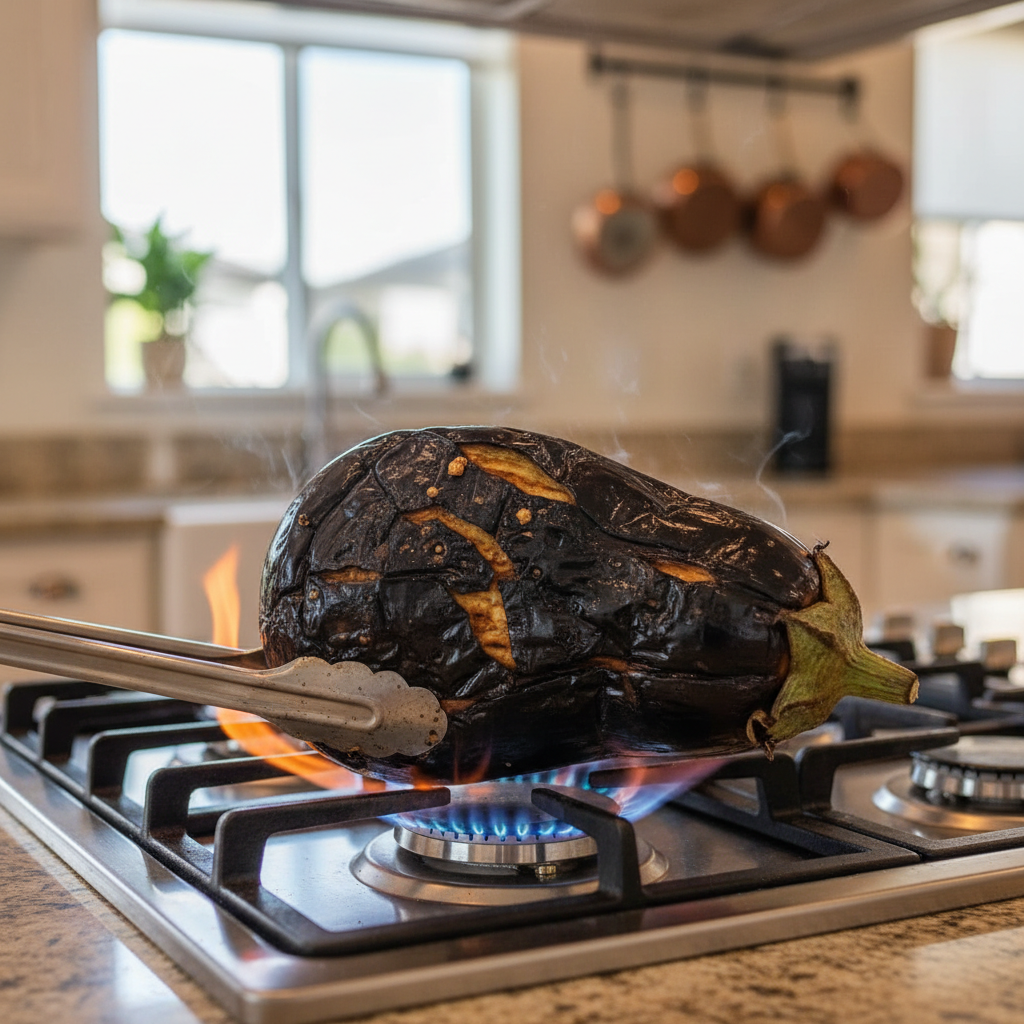
- Prick eggplant 6–8 times with a fork so it doesn’t burst.
- Roast directly over flame, turning with tongs until skin is heavily blistered and blackened in patches.
- Eggplant should feel collapsed and soft when pressed.
Option B: Oven broiler (best for electric stoves)
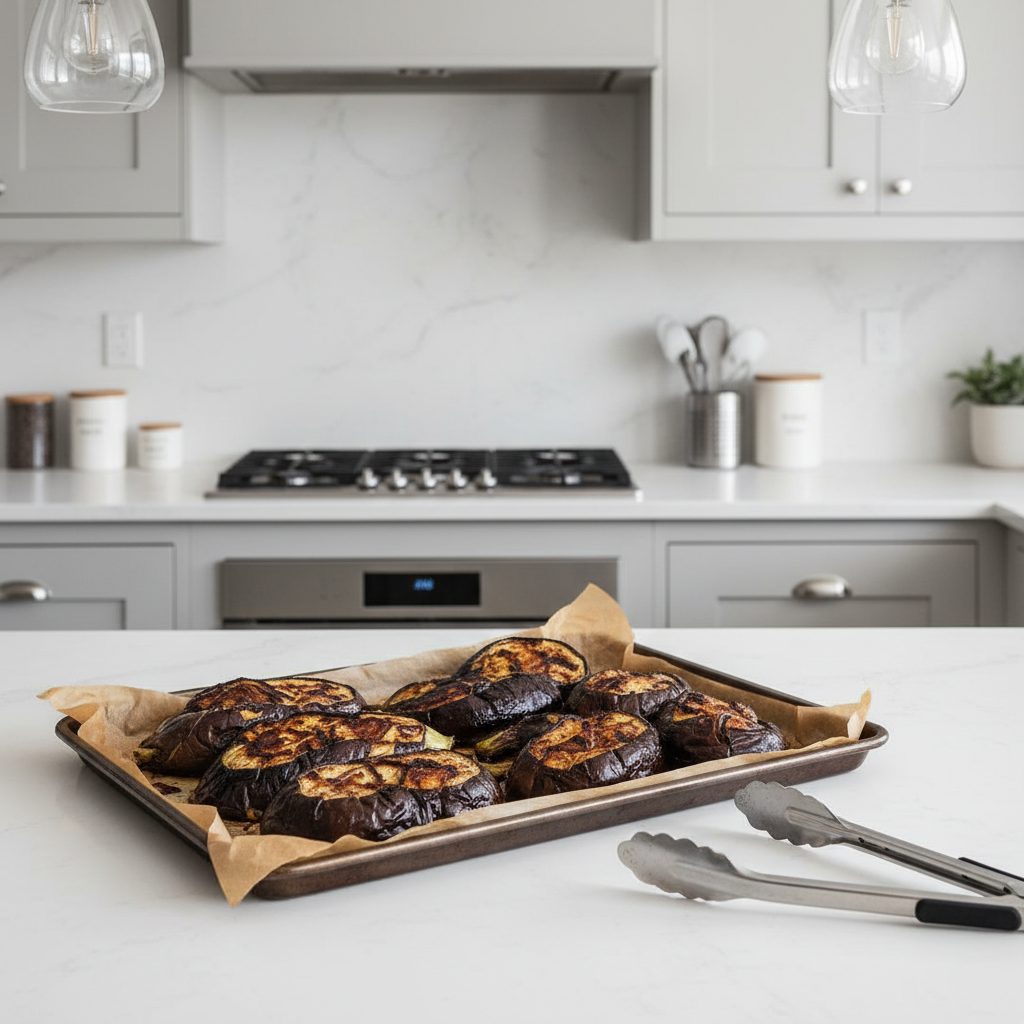
- Line a sheet pan with foil, lightly oil eggplant.
- Broil close to the heating element, turning every 6–8 minutes.
- Keep going until you see real blistering and dark spots, not just “wrinkled.”
Option C: Air fryer (convenient, mild smoke)
- Lightly oil and roast at a high setting, turning halfway.
- If your model runs cool, extend time until the skin looks blistered.
Texture check: if the flesh still has firm, white chunks, it needs more heat. Under-roasted eggplant is where bitterness and chewiness sneak in.
Quick self-check: why your bharta tastes “off”
If you’ve tried this before and didn’t love it, it usually falls into one of these buckets. Fix the right bucket, don’t just add more spices and hope.
- Watery: eggplant steamed instead of roasted, or you didn’t drain the flesh after peeling.
- Bitter: eggplant over-mature, too seedy, or you scraped burnt skin into the mash.
- Flat flavor: masala didn’t cook long enough, or salt went in too late to balance tomato acidity.
- Harsh raw bite: ginger/garlic added but not cooked out, onion rushed.
- Too smoky: char got ashy, or too much burnt skin mixed in.
Step-by-step: how to make baingan bharta roasted (classic home style)
This is the workflow that tends to hold up in real kitchens, not just on a recipe card. Your exact timings vary by stove, pan, and eggplant size, so use the visual cues.
1) Roast, rest, peel, and drain
- Roast using your chosen method until skin blisters and the eggplant collapses.
- Rest 5–10 minutes so steam finishes the interior.
- Peel skin off, then split and scrape out flesh.
- Place flesh in a colander 5 minutes to let excess moisture drip.
Small safety note: charred skin can be messy and hot, use tongs and let it cool a bit before peeling. According to USDA, using clean utensils and avoiding cross-contamination helps reduce food safety risk when handling cooked foods.
2) Build a masala that tastes “cooked,” not sharp
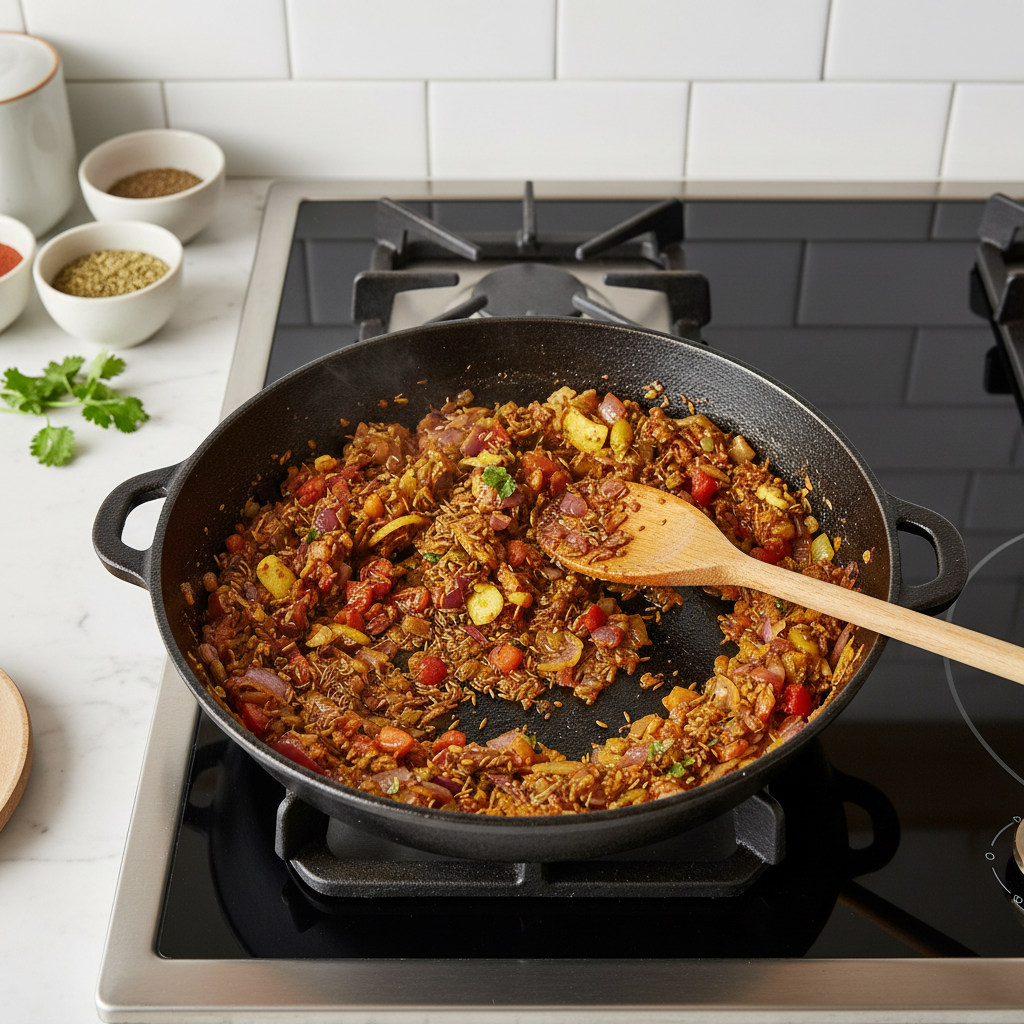
- Heat oil in a pan, add cumin seeds until fragrant.
- Add chopped onion with a pinch of salt, cook until golden at the edges.
- Add ginger and garlic, cook until aroma softens.
- Add chopped tomato, cook until it looks jammy and oil starts separating at spots.
If you stop early, the tomato stays raw-tart and the whole dish tastes unfinished. This step looks boring, but it’s where depth comes from.
3) Add eggplant, mash to your preferred texture
- Add drained roasted eggplant flesh to the pan.
- Mash with the spoon for a rustic texture, or use a potato masher for smoother bharta.
- Add chili, ground coriander (optional), and a pinch of turmeric if you like the color.
- Simmer a few minutes so the mash absorbs the masala.
Salt timing: taste and adjust salt near the end, but don’t wait until the last second. Salt helps the tomato and eggplant taste rounder, especially if your tomatoes are very acidic.
4) Finish bright, not heavy
- Turn heat off, add chopped cilantro.
- Optional: a small knob of butter or a drizzle of mustard oil for aroma, use lightly.
- Serve with roti, naan, or rice, plus plain yogurt if you want contrast.
Practical tips that actually change the result
These are the small moves that usually separate “fine” bharta from “make it again” bharta.
- Don’t trap steam: avoid covering the roasted eggplant while it rests, it can soften the char flavor.
- Drain briefly: 5 minutes in a colander often fixes watery texture without drying it out.
- Cook the tomato down: you’re looking for a thicker, darker base that smells sweet and savory.
- Control bitterness: scrape only the soft interior, leave truly burnt flakes behind.
- Spice restraint: bharta is smoky and savory, not a curry powder showcase.
Common mistakes and how to avoid them
A lot of recipes fail people because they sound “easy” and skip the checks. These are the traps I see most often.
- Using a tiny eggplant: you end up with more skin-to-flesh ratio and less creamy mash.
- Not charring enough: the dish tastes like sautéed vegetables, not roasted baingan bharta.
- Over-charring into ash: bitterness increases, and the smoke taste turns harsh.
- Adding all spices at once: some spices need oil blooming, others taste dusty if cooked too long.
- Skipping acidity balance: if tomatoes are sharp, a tiny pinch of sugar can help, but go small.
When to adjust for diet, allergies, or health concerns
Baingan bharta is naturally plant-forward and can be vegan, but individual needs vary. If you manage sodium intake or have digestive sensitivities to chili, garlic, or onion, you may want to adapt the recipe and, if it’s medically relevant, check with a qualified professional.
- Lower heat: use less chili, add black pepper for gentle warmth.
- Lower oil: use a nonstick pan and add small splashes of water while cooking onions, though flavor may be lighter.
- Gluten-free serving: pair with rice or gluten-free flatbread.
According to FDA, checking labels on packaged spices and prepared pastes can help avoid unexpected allergens, especially in shared facilities.
Conclusion: a simple dish that rewards good roasting
Once you understand that how to make baingan bharta roasted is really a roasting-and-masala timing game, the recipe becomes reliable, not mysterious. Push the char until the eggplant collapses, cook the tomato-onion base until it tastes sweet and rounded, then mash and finish with freshness.
If you want a concrete next step, pick one roasting method and repeat it twice, taking notes on how dark you let the skin get and whether you drained the flesh. That tiny bit of consistency usually gets you to restaurant-level flavor at home.
Key takeaways:
- Deep blistering creates the signature smoky bharta flavor.
- Drain briefly to prevent watery texture.
- Cook masala down until it smells sweet and looks thicker.
- Finish bright with cilantro and careful seasoning.
If you’re cooking for guests and want a more hands-off approach, broiling the eggplant on a sheet pan often feels easier than managing an open flame, while still giving you the roasted character people expect.