
Fruit salad recipes sound simple, but in summer they often turn watery, brown too fast, or taste like a random bowl of “whatever was left in the fridge.”
This guide keeps it practical: how to pick fruits that hold up, how to prep so texture stays crisp, and a few dressing ideas that add flavor without masking the fruit. You’ll also get mix-and-match recipes you can scale for a weekday snack or a backyard cookout.
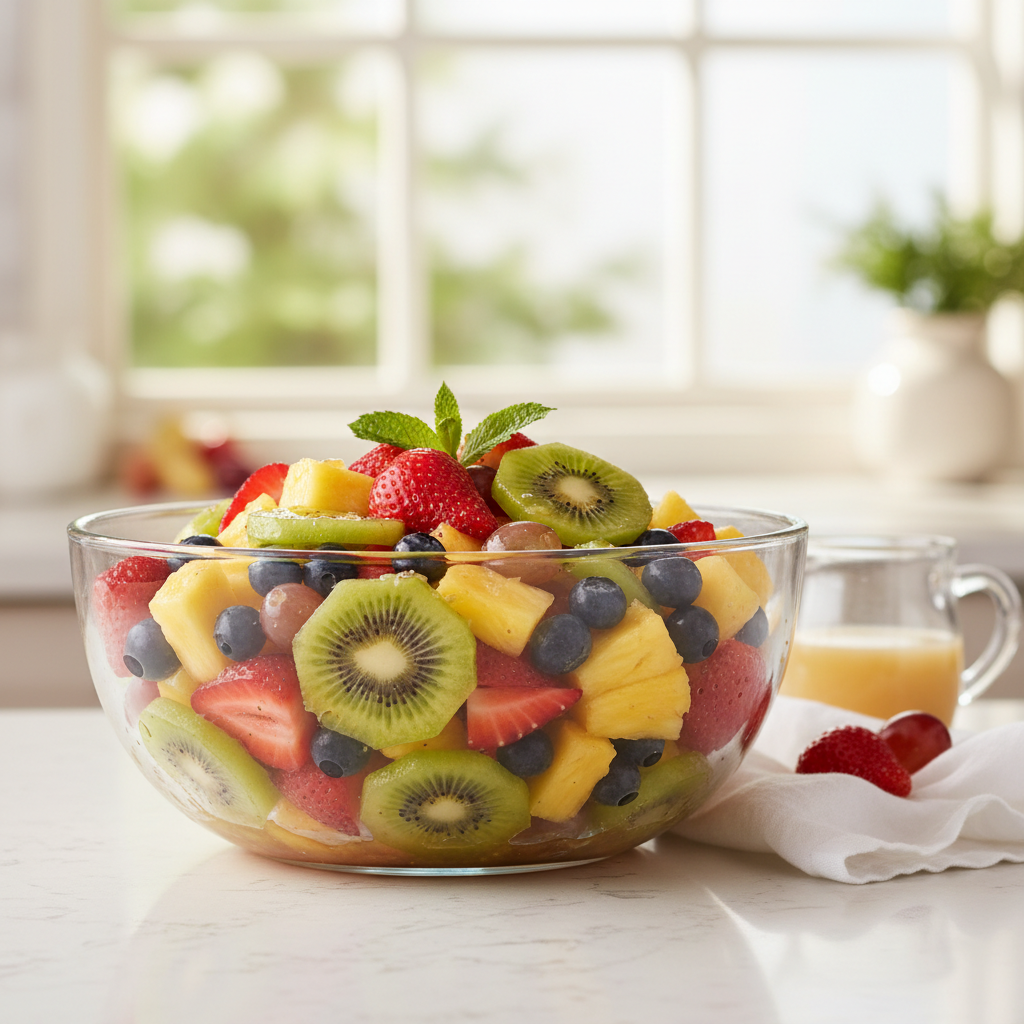
One quick mindset shift helps: a good fruit salad is less about “more variety,” more about balance—sweet vs tart, juicy vs firm, and fruit that browns quickly vs fruit that doesn’t. That’s what makes it taste intentional.
Why summer fruit salad goes wrong (and how to prevent it)
Most disappointments come from a few predictable issues, not your cooking skills.
- Too much high-water fruit: watermelon and strawberries are great, but in many bowls they flood everything. Pair them with firm fruit or add them close to serving time.
- Oxidation: apples, bananas, peaches, pears can brown. Acid (citrus) slows browning, and so does cutting slightly larger pieces.
- Texture mismatch: soft berries get crushed if mixed aggressively with heavy chunks. Fold gently, and add delicate fruit last.
- Sweetness falls flat: fully ripe fruit carries the salad, but a small amount of salt, citrus zest, or fresh herbs can “wake up” flavor.
According to the USDA, cut fruit is perishable and should not sit at room temperature for more than about two hours (less in hot outdoor conditions), so plan your timing if it’s a picnic situation.
A quick self-check: what kind of fruit salad are you making?
If you decide this upfront, your choices get easier fast.
- Make-ahead (4–24 hours): prioritize firm fruit (grapes, pineapple, blueberries), keep super-juicy fruit separate, use a light citrus-honey dressing.
- Serve-now (0–2 hours): you can use more watermelon, sliced stone fruit, and delicate berries.
- Kid-friendly: keep flavors familiar, go easy on herbs, cut into bite-size pieces, skip spicy add-ins.
- “Grown-up” BBQ bowl: add mint or basil, citrus zest, maybe a little ginger; use a bigger mix of tart fruits.
If you’re bringing it to an event, ask yourself one more thing: will it sit on ice, in shade, or on a hot table? That answer changes everything.
The core formula: mix fruit by “roles” (with a simple table)
When people search fruit salad recipes, they usually want a reliable structure. This is the structure.
| Role | What it does | Best picks | Use with care |
|---|---|---|---|
| Base (firm) | Holds shape, stays crisp | Grapes, pineapple, apples, blueberries | Apples brown, treat with citrus |
| Juicy highlight | Big summer vibe, adds freshness | Watermelon, strawberries, oranges | Add closer to serving to avoid pooling |
| Creamy/soft | Rounds out bite, feels “dessert-y” | Mango, banana, ripe peach | Banana browns fast, add last |
| Tart pop | Stops it tasting one-note | Kiwi, raspberries, pomegranate arils | Kiwi can soften other fruit over time |
| Aroma booster | Makes it taste “made,” not random | Lime zest, mint, basil | Go light, herbs can dominate |
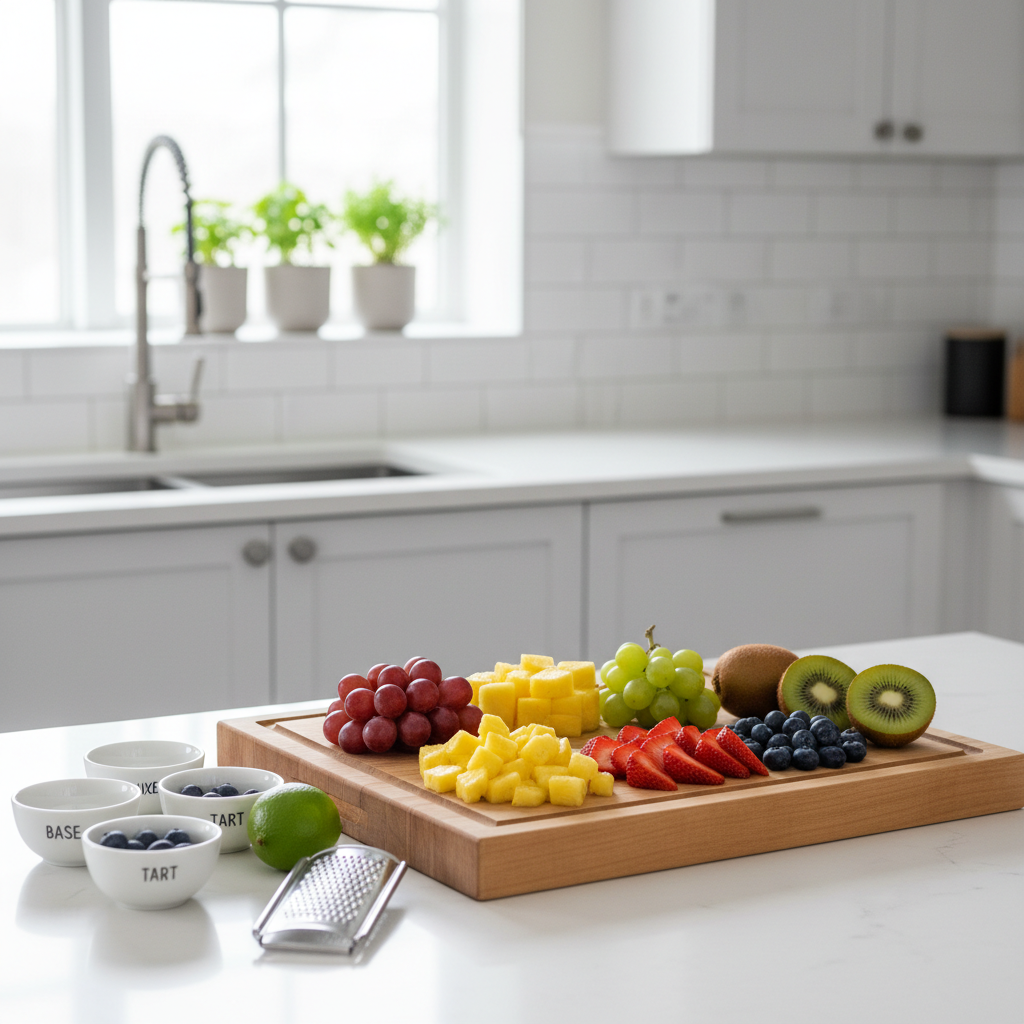
Key takeaway: if you build around a firm base and add juicy fruit late, you avoid the “soup bowl” problem without needing thickeners or gimmicks.
5 fresh fruit salad recipes for summer (with real-world prep notes)
These are meant to be flexible. If you’re missing one fruit, swap within the same “role” from the table above.
1) Classic Backyard Bowl (crowd-friendly)
- Fruit: grapes, pineapple, strawberries, blueberries
- Dressing: orange juice + lime juice + a little honey + pinch of salt
- Prep note: keep strawberries whole or halved so they don’t collapse.
2) Watermelon-Lime-Mint (serve-now refresher)
- Fruit: watermelon cubes, cucumber (optional), strawberries, blueberries
- Finish: lime zest + chopped mint
- Prep note: drain watermelon briefly in a colander if it seems extra wet.
3) Tropical Picnic Salad (holds up better)
- Fruit: pineapple, mango, grapes, kiwi (add kiwi right before serving if making ahead)
- Dressing: lime juice + a touch of grated ginger
- Prep note: cut mango in bigger chunks, it bruises when tiny.
4) Berry-Forward “Not Too Sweet” Bowl
- Fruit: strawberries, blueberries, raspberries, blackberries
- Dressing: lemon juice + a spoon of maple syrup, optional poppy seeds
- Prep note: rinse berries fast, dry well; water clinging to berries dilutes flavor.
5) Stone Fruit + Basil (BBQ-side vibe)
- Fruit: peaches/nectarines, cherries, blueberries
- Finish: basil ribbons + balsamic splash (tiny amount) + pinch of salt
- Prep note: choose ripe-but-firm stone fruit so slices don’t turn mushy.
Step-by-step: how to prep, dress, and store without sogginess
This is the part most recipes skip, even though it decides whether your bowl feels fresh or tired.
- Cut strategy: keep pieces similar size, but don’t dice everything small. Bigger chunks leak less juice.
- Dry matters: after rinsing berries or grapes, dry well with a towel or salad spinner insert.
- Layering: firm fruit in the bowl first, delicate fruit on top, then fold once or twice.
- Dressing timing: if serving later, add dressing right before serving, or add only half and save half for the last toss.
- Cold storage: cover and refrigerate; if you see pooled juice, gently spoon some off before serving.
If you need it to travel, bring fruit and dressing separately, combine on arrival, and keep it chilled in a cooler when possible.
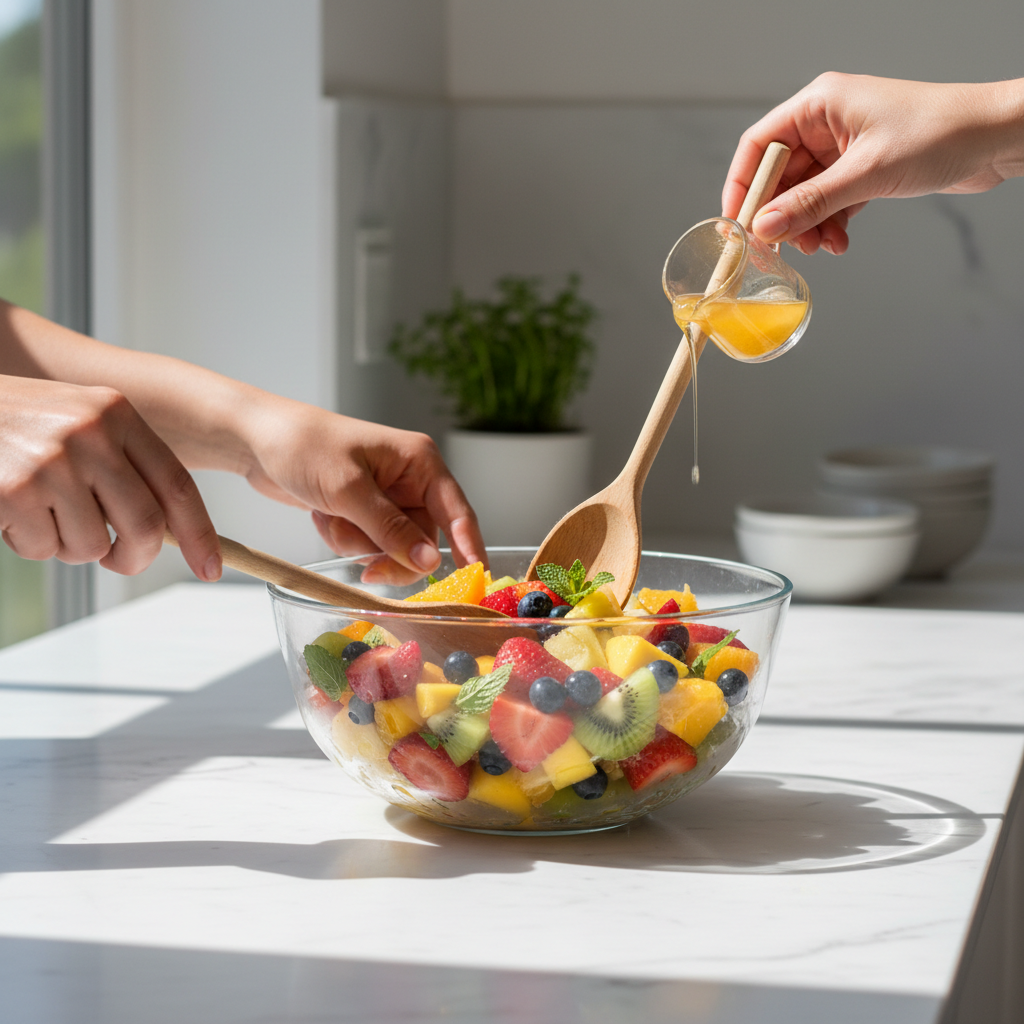
Optional upgrade: a little citrus zest (not just juice) adds aroma, which makes the salad taste more “complete” without extra sugar.
Common mistakes (that feel harmless but ruin the bowl)
- Overmixing: berries break, and the whole salad looks bruised. Fold gently, stop early.
- Too much sweetener: if fruit is ripe, sugar can flatten flavor. Try salt + citrus first.
- Using canned fruit without adjusting: it can be softer and sweeter. If you use it, drain well and reduce dressing sweetness.
- Adding banana too early: it browns and goes slick. Add at the end, or skip for make-ahead bowls.
Also, be careful with “one-bowl overnight” plans for very mixed fruit; in many cases, it’s better to prep components and combine the day of.
When to be extra cautious (food safety and dietary needs)
Fruit salad is generally low-risk, but summer heat changes the equation. According to the FDA, perishable foods left out too long can enter a temperature “danger zone,” so chilling and time limits matter at cookouts.
- Outdoor parties: serve smaller bowls, refill from the fridge or cooler.
- Allergies: watch for cross-contact if you add nuts, coconut, or shared utensils.
- Medical diets: if someone manages blood sugar or potassium, fruit choices may matter; it’s reasonable to suggest they check with a clinician or registered dietitian.
Conclusion: keep it bright, not complicated
The best fruit salad recipes don’t rely on fancy tricks, they rely on smart pairing and timing: build on firm fruit, add juicy fruit late, keep dressing light, and stop mixing before the bowl looks “worked.”
If you want one action step, pick a make-ahead-friendly base today (grapes + pineapple is hard to mess up), then choose one tart pop and one aroma booster. Your next bowl will taste like you meant it.
FAQ
What fruits should you avoid mixing in a make-ahead fruit salad?
Bananas and very ripe stone fruit tend to soften quickly, and watermelon often releases a lot of liquid. If you want them, add close to serving time or keep them separate.
How do I keep apples or bananas from turning brown?
Acid helps. Toss cut apples with lemon or lime juice, and keep pieces a bit larger. For bananas, many people have better luck adding them at the end rather than trying to “treat” them.
Should I wash fruit before cutting for fruit salad?
Yes, in most home kitchens it’s the safer habit. Drying matters just as much for flavor and texture, especially with berries and grapes.
What’s the best dressing for summer fruit salad that isn’t too sweet?
Start with citrus juice and zest, then add sweetness only if the fruit needs it. A pinch of salt sounds odd, but it often makes the fruit taste more like itself.
Why does my fruit salad get watery even when I don’t add dressing?
Some fruits naturally shed juice after cutting, especially watermelon and strawberries. Cutting larger pieces, draining watermelon briefly, and adding delicate fruit later usually reduces pooling.
Can I make fruit salad the night before a party?
Often yes, but choose firm fruit and hold back the juiciest items. In many cases, prepping fruit and storing it separately, then combining a few hours before serving, tastes fresher.
How long can fruit salad sit out at a barbecue?
It depends on heat and shade, but in hot weather it’s smart to keep it chilled and swap in fresh bowls rather than leaving one big bowl out. When in doubt, follow USDA and FDA food-safety guidance and keep time at room temperature short.
If you’re planning a cookout and want a more “set it and forget it” approach, build your bowl around firm fruit, pack dressing separately, and keep a backup portion chilled so the salad stays fresh from the first serving to the last.