
Best pyaz kachori recipe rajasthani searches usually come from one frustration: you want that shatter-crisp shell and a punchy onion filling, but home batches turn greasy, soft, or oddly sweet. The good news is it’s not “talent,” it’s technique—mainly dough fat ratio, filling moisture control, and frying temperature.
If you cook for family or bring snacks to a party, pyaz kachori is the kind of crowd-pleaser that disappears fast. It also happens to be one of those recipes where small tweaks make a big difference, so once you dial it in, you’ll repeat it without stress.
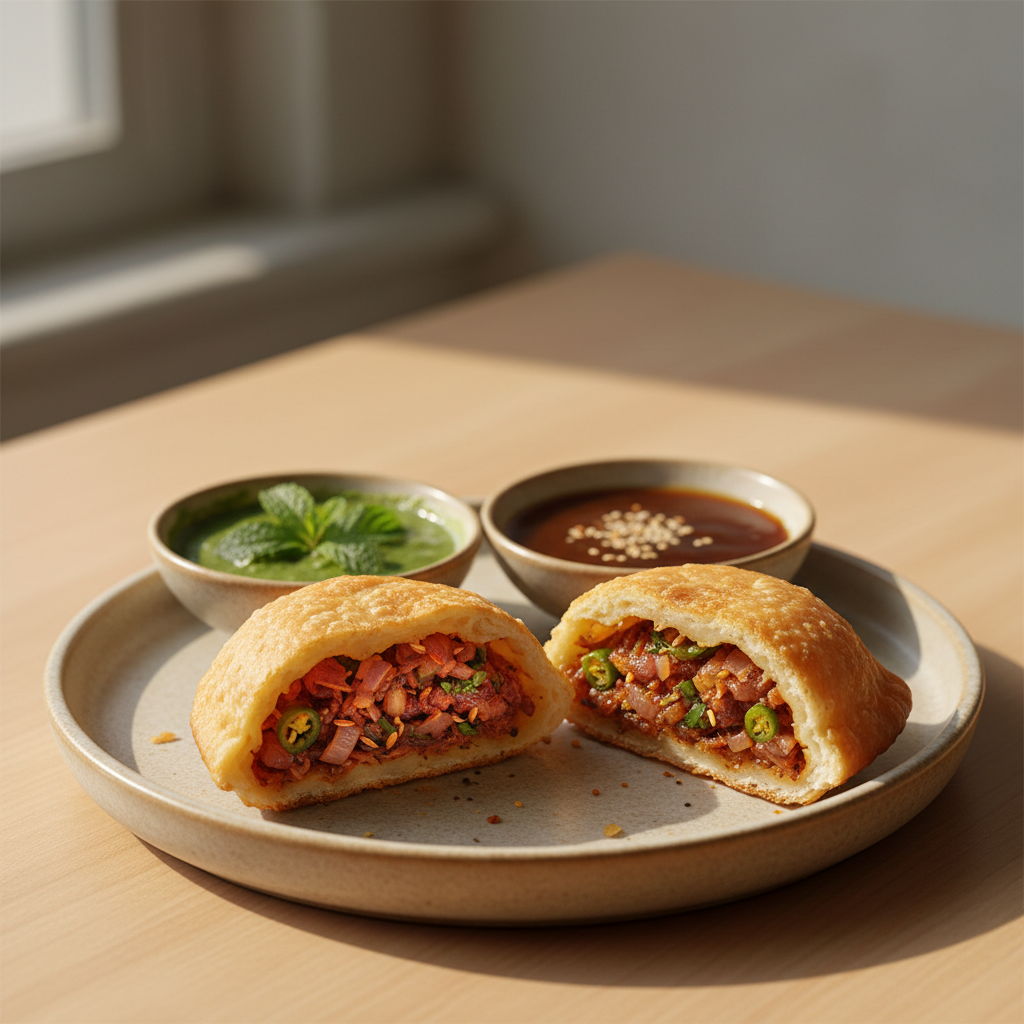
This guide stays practical: what to buy in a U.S. kitchen, how to keep onions from watering out your filling, and how to fry so the shell stays crisp. I’ll also share a quick troubleshooting section, because most “recipe fails” have a pretty predictable cause.
What makes a Rajasthani pyaz kachori taste “right”
Rajasthani-style pyaz kachori usually leans savory, aromatic, and a little assertive. It’s not a delicate pastry—its charm is contrast: crisp outside, soft spicy inside.
- Shell: flaky but sturdy, not bread-like, not blistered to the point of cracking.
- Filling: onion-forward with warm spices, lightly tangy, and not wet.
- Fry: slow enough to cook layers, hot enough to avoid oil soak.
According to the USDA, onions are high in water content, which is exactly why many fillings turn soggy if you don’t manage moisture well. That single fact explains a lot of home results.
Ingredients (U.S.-friendly) + smart substitutions
You can make a very convincing kachori without specialty shops, but a few pantry choices help.
For the dough
- 2 cups all-purpose flour
- 1/2 tsp salt
- 1/4 cup ghee (or neutral oil; ghee tastes more classic)
- 1/2 cup water (approx, add gradually)
For the onion filling
- 3 cups finely sliced yellow onions (about 3 medium)
- 2 tbsp besan (chickpea flour)
- 1.5 tbsp fennel seeds, lightly crushed
- 1 tsp coriander powder
- 1/2 tsp cumin powder
- 1 tsp red chili powder (adjust)
- 1/4 tsp turmeric
- 1 tsp amchur (dried mango powder) or 2 tsp lemon juice
- 1 tsp salt (or to taste)
- 2 tbsp oil
- Optional: 1-2 green chilies, minced
For frying
- Neutral high-heat oil (canola, peanut, sunflower)
Substitution note: If you can’t find amchur, lemon juice works, but add it after the mixture cools a bit so it doesn’t push out extra moisture while hot.
Quick table: common problems and what usually fixes them
If your last batch disappointed you, check this first before you change everything at once.
| Problem | Likely cause | Fix |
|---|---|---|
| Soggy shell after cooling | Filling too wet or oil too cool | Cook onion moisture down, add besan, fry at steady medium |
| Greasy kachori | Low oil temp, overproofed dough (too soft) | Keep oil around medium, make firm dough, rest properly |
| Hard shell | Dough too tight or fried too hot | Add a little more water, fry slower |
| Filling leaks | Overstuffed or edges not sealed | Use less filling, pinch seams firmly, rest 5 minutes |
Step-by-step: best pyaz kachori recipe rajasthani at home
This is the workflow that tends to produce consistent results: dough first, filling second, shaping third, frying last. Sounds obvious, but timing matters because onions keep releasing moisture as they sit.
1) Make the dough (flaky, not puff pastry)
- In a bowl, mix flour and salt.
- Add ghee, rub it into the flour until it looks like coarse breadcrumbs. When you press a bit, it should hold its shape.
- Add water slowly and knead just until a firm dough forms. Avoid over-kneading.
- Cover and rest 20–30 minutes.
Key point: That “rubbed in fat” step is what helps the shell crisp and form light layers. If you rush it, the crust can turn bready.
2) Cook the onion masala filling (dry, aromatic)
- Heat 2 tbsp oil in a pan on medium.
- Add fennel seeds and let them sizzle 15–20 seconds.
- Add onions and cook until softened and lightly golden. Don’t caramelize deeply; you want savory bite, not jammy sweetness.
- Add spices (coriander, cumin, chili, turmeric) and salt, stir 30–45 seconds.
- Sprinkle besan and cook 2–3 minutes, stirring so it toasts and absorbs moisture.
- Turn off heat, add amchur. Cool completely before stuffing.
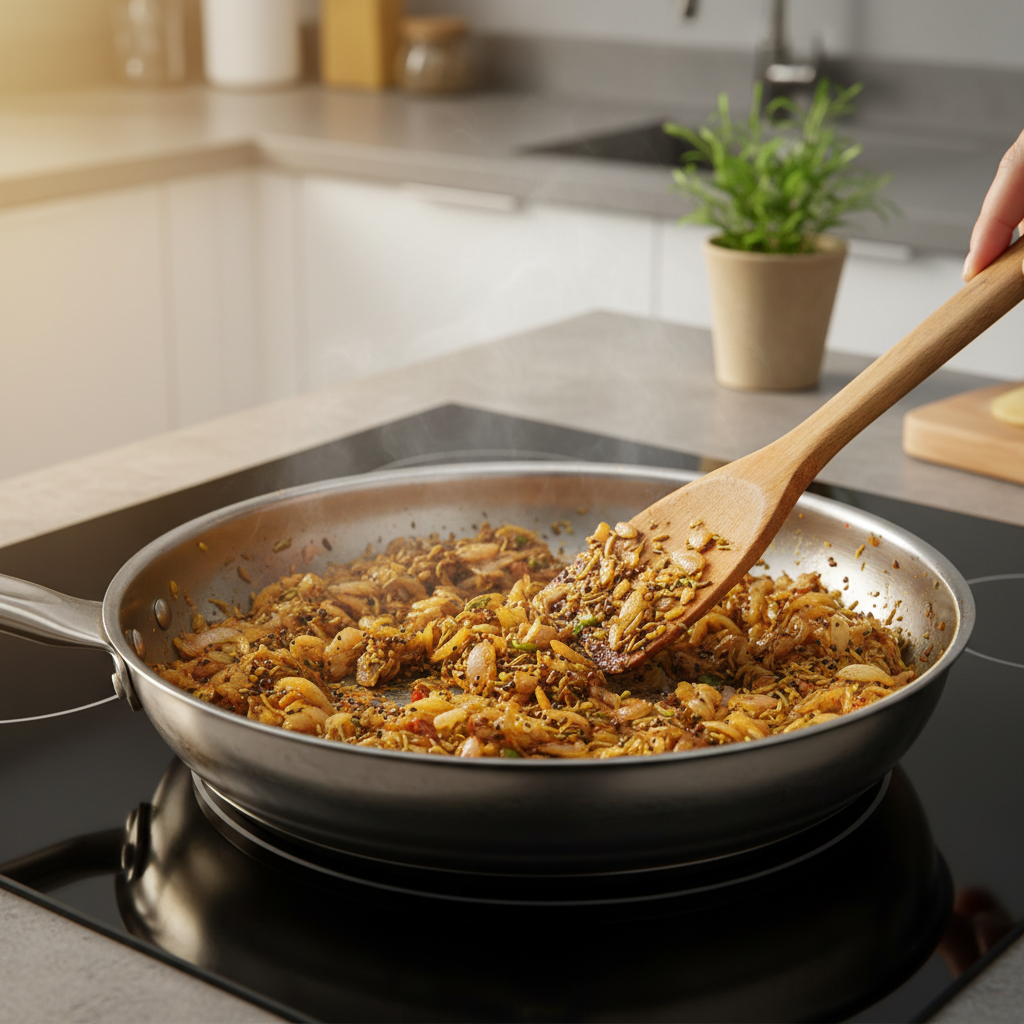
Moisture check: when you drag a spoon through the pan, the mixture should not puddle. If you see liquid, cook 2–4 minutes longer on low, stirring.
3) Shape and fill (this is where leaks start)
- Divide dough into 10–12 balls.
- Take one ball, flatten into a disc, then press edges thinner than the center.
- Add 1–1.5 tbsp filling in the center.
- Bring edges together, pinch to seal, twist off excess, then gently flatten.
- Rest shaped kachori 5–10 minutes before frying.
That short rest helps the seam settle so it doesn’t burst the moment it hits oil.
4) Fry low-and-steady for crisp layers
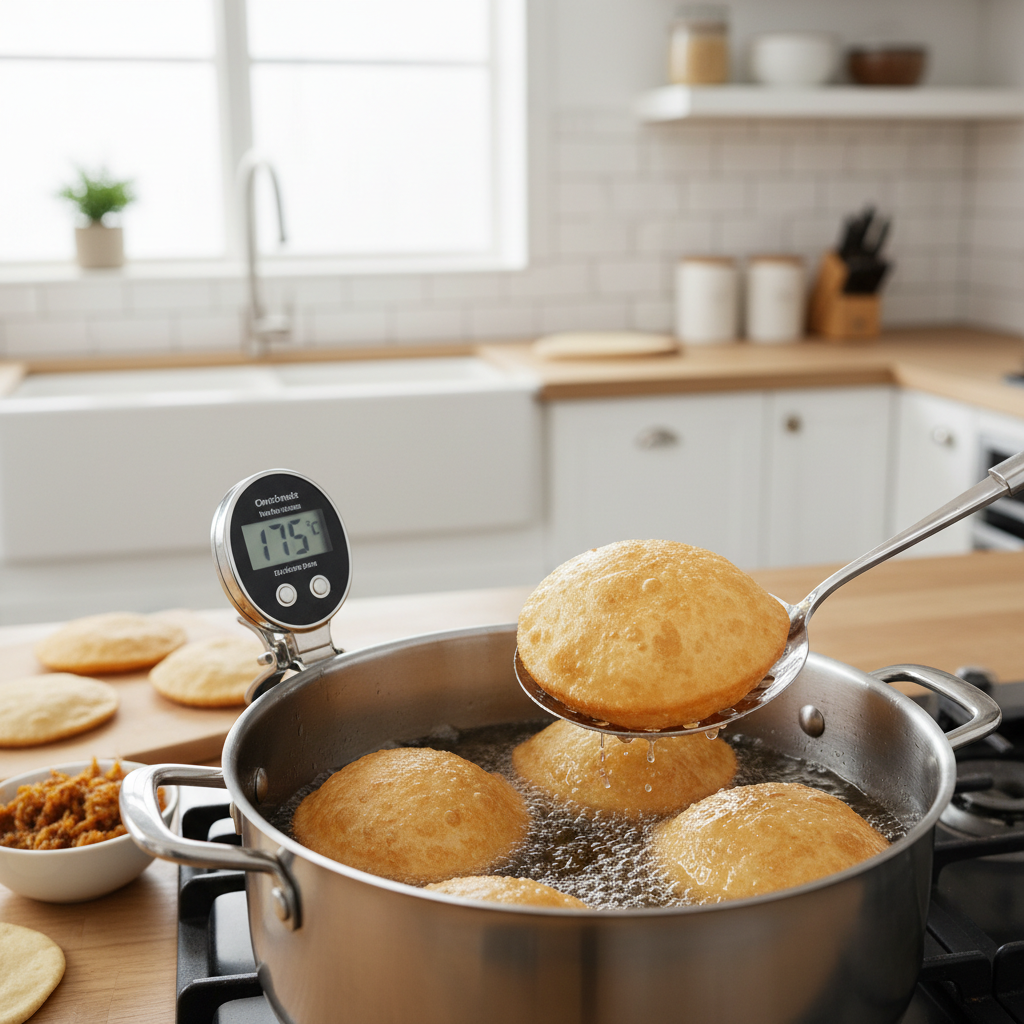
- Heat oil in a deep pan on medium. If you have a thermometer, aim roughly 325–350°F.
- Slide in 2–3 kachori, don’t crowd.
- Fry slowly, turning occasionally, until deep golden and crisp, usually 10–14 minutes per batch depending on size.
- Drain on a rack (paper towels can trap steam and soften the shell).
According to the FDA, using a food thermometer is a helpful way to control cooking outcomes and safety. For frying, it’s also your best defense against temperature drift and oil absorption.
Make it easier: prep ahead and serve like a snack shop
If you want party-friendly results, planning beats last-minute frying chaos.
- Make filling 1 day ahead: cool, refrigerate in an airtight container. If it looks wet the next day, reheat briefly to dry it out, then cool again.
- Dough same day works best: you can mix earlier and keep covered at room temp a few hours.
- Shape ahead: shaped kachori can sit 30–45 minutes covered, but don’t push too far or seams may weaken.
Serving ideas: mint-cilantro chutney, tamarind-date chutney, or even plain yogurt with a pinch of chaat masala. For a heartier plate, serve with aloo sabzi.
Safety and dietary notes (real-life kitchen stuff)
Deep-frying is simple, but it’s still hot oil. Keep kids and pets away from the stove, use a deep pot, and avoid adding wet utensils into oil.
- If you have allergies (chickpea flour, spices), adjust ingredients and consider asking a healthcare professional for personal guidance.
- Reusing frying oil is common, but strain and store safely, and discard if it smells off or smokes easily.
Oil fires are rare but serious, so keep a lid nearby and never pour water on an oil fire. If you’re unsure about your setup, it’s reasonable to shallow-fry smaller kachori or use a countertop fryer that holds temperature better.
Key takeaways (so you don’t forget mid-cook)
- Dry filling wins: onions release water, so cook them down and use besan to bind.
- Firm dough, proper rest: too soft often turns oily.
- Medium heat frying: rushing with high heat hardens the shell, low heat makes it greasy.
- Drain on a rack: steam is the enemy of crunch.
Conclusion: your next batch should be noticeably crisper
The best batches come from a few boring habits: measure fat in the dough, cool the filling, and keep the oil steady. Once those are locked in, the rest feels almost forgiving.
If you’re trying this best pyaz kachori recipe rajasthani style for the first time, pick one goal—usually “dry filling” or “steady oil temp”—and focus on that before tweaking spices. Your crunch will improve fast, and after that you can make it as bold or mild as your table prefers.