
Stuffed bell peppers are one of those dinners that look impressive, but the real win is how forgiving they are when you want a meatless meal that still eats like a full plate.
If you’ve avoided them because they seem time-consuming, bland, or watery, you’re not alone. The good news is you can solve most of that with two small choices: pre-cooking the filling so it’s already flavorful, and roasting the peppers just enough so they’re tender but not collapsed.
This guide walks you through a simple vegetarian approach that works on busy weeknights, scales well for meal prep, and stays flexible for picky eaters or whatever’s in your pantry.
What makes vegetarian stuffed peppers “easy” (and what usually goes wrong)
Most “hard” stuffed pepper recipes fail for practical reasons, not skill. The filling tastes flat because it went in unseasoned, the peppers release water and dilute everything, or the rice ends up undercooked because it tried to finish cooking inside the pepper.
Here’s the simpler mindset: cook the filling fully on the stove, then treat the peppers like a short roast-and-melt situation. You’re basically assembling something that’s already delicious.
- Watery peppers: common when peppers bake too long or the filling is too saucy.
- Crunchy rice: happens when uncooked rice goes in raw and timing doesn’t line up.
- Bland results: usually missing salt, acid (lime/lemon/tomato), or a strong spice base.
Quick self-check: which version fits your night?
Before you start, pick your “mode.” It saves decision fatigue and keeps dinner from dragging.
- Fast weeknight: use microwave rice or leftover grains, canned beans, jarred salsa.
- Meal prep: make a big batch of filling, stuff and bake twice during the week.
- Clean-out-the-fridge: swap in any cooked veggies, greens, or leftover roasted vegetables.
- Family-friendly: keep spices mild, offer hot sauce at the table.
If you’re short on time, you can also roast the peppers while the filling cooks, so the oven does work in the background.
Core recipe: easy vegetarian stuffed bell peppers
This is the “base” that most people enjoy, with room to adjust. It makes about 4 pepper halves (2 whole peppers) to 6 halves (3 peppers), depending on size and how generously you stuff.
Ingredients (flexible but reliable)
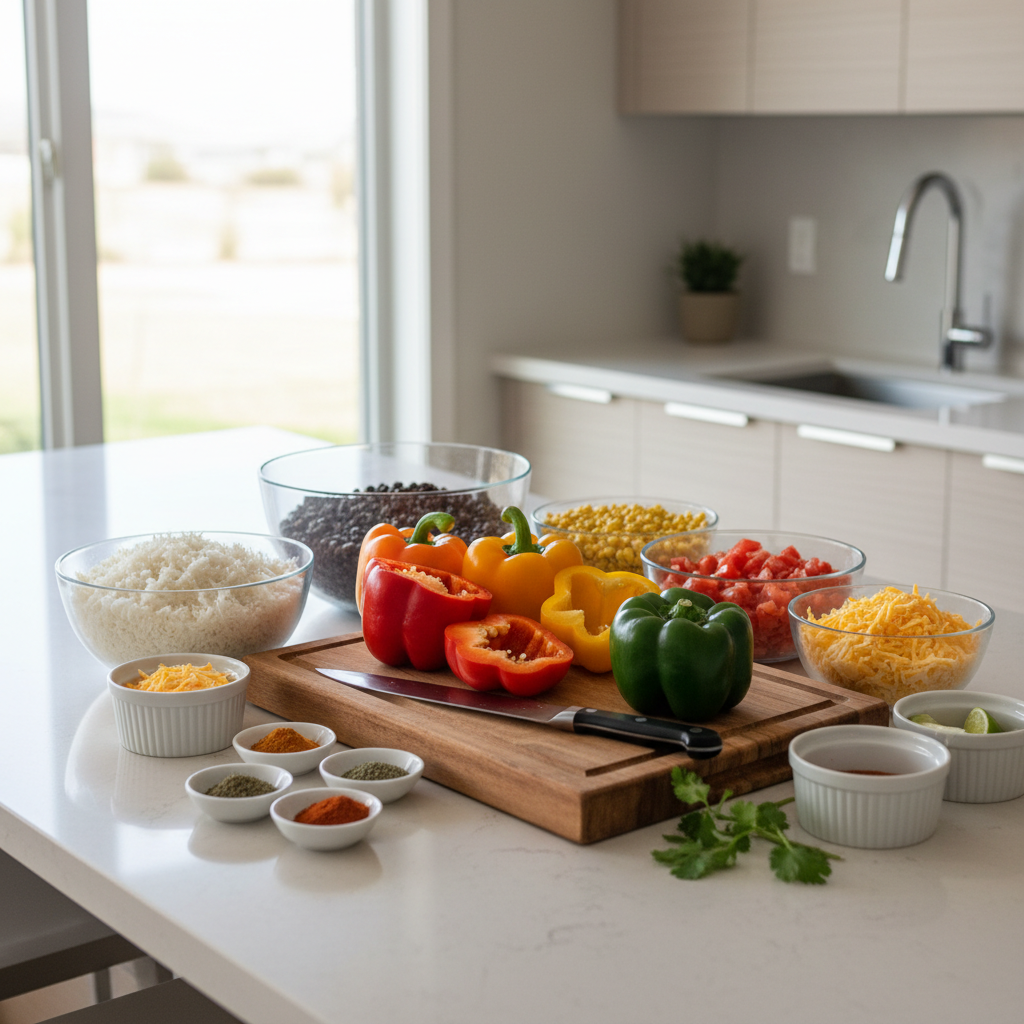
- 2–3 large bell peppers, halved lengthwise, seeds removed
- 1 tbsp olive oil
- 1 small onion, diced
- 2 cloves garlic, minced
- 1–2 tsp chili powder (or a mix of cumin + smoked paprika)
- 1 cup cooked rice, quinoa, or farro (leftover works great)
- 1 can black beans (or pinto), drained and rinsed
- 1 cup corn (frozen is fine)
- 1 cup salsa or diced tomatoes (choose thicker salsa if you hate watery filling)
- Salt and pepper
- 1 cup shredded cheese (cheddar, Monterey Jack) or a dairy-free alternative
- Optional: chopped cilantro, lime wedges, sliced jalapeños, Greek yogurt/sour cream
Steps (stove first, oven second)
1) Heat the oven: 400°F. Set pepper halves cut-side up in a baking dish. Add a small splash of water to the bottom of the dish (a few tablespoons, not a pool) to prevent scorching.
2) Build flavor in the pan: warm olive oil, cook onion until soft, then add garlic and spices for about 30 seconds so they bloom and smell fragrant.
3) Finish the filling: stir in beans, corn, rice, and salsa. Simmer until the mixture looks cohesive and not soupy, 3–5 minutes. Taste and adjust salt; this is where the dish is won or lost.
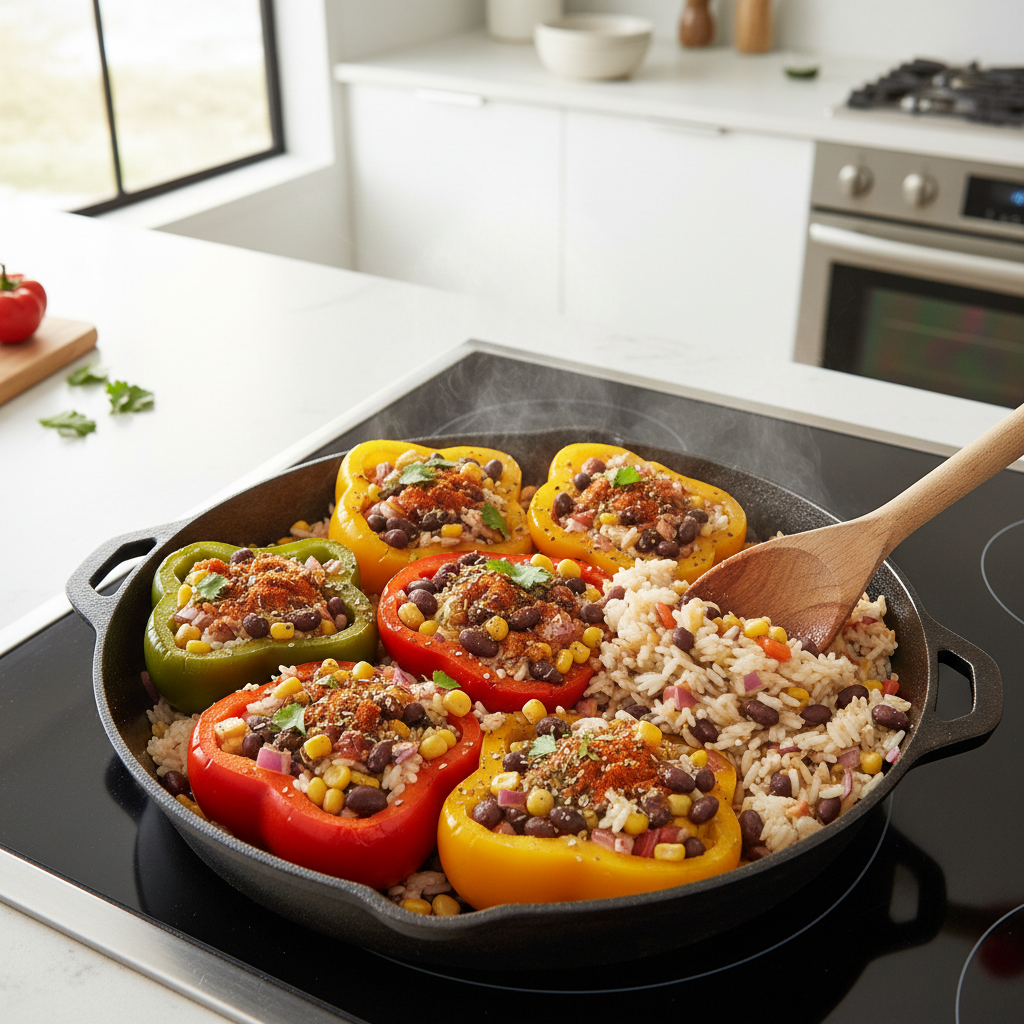
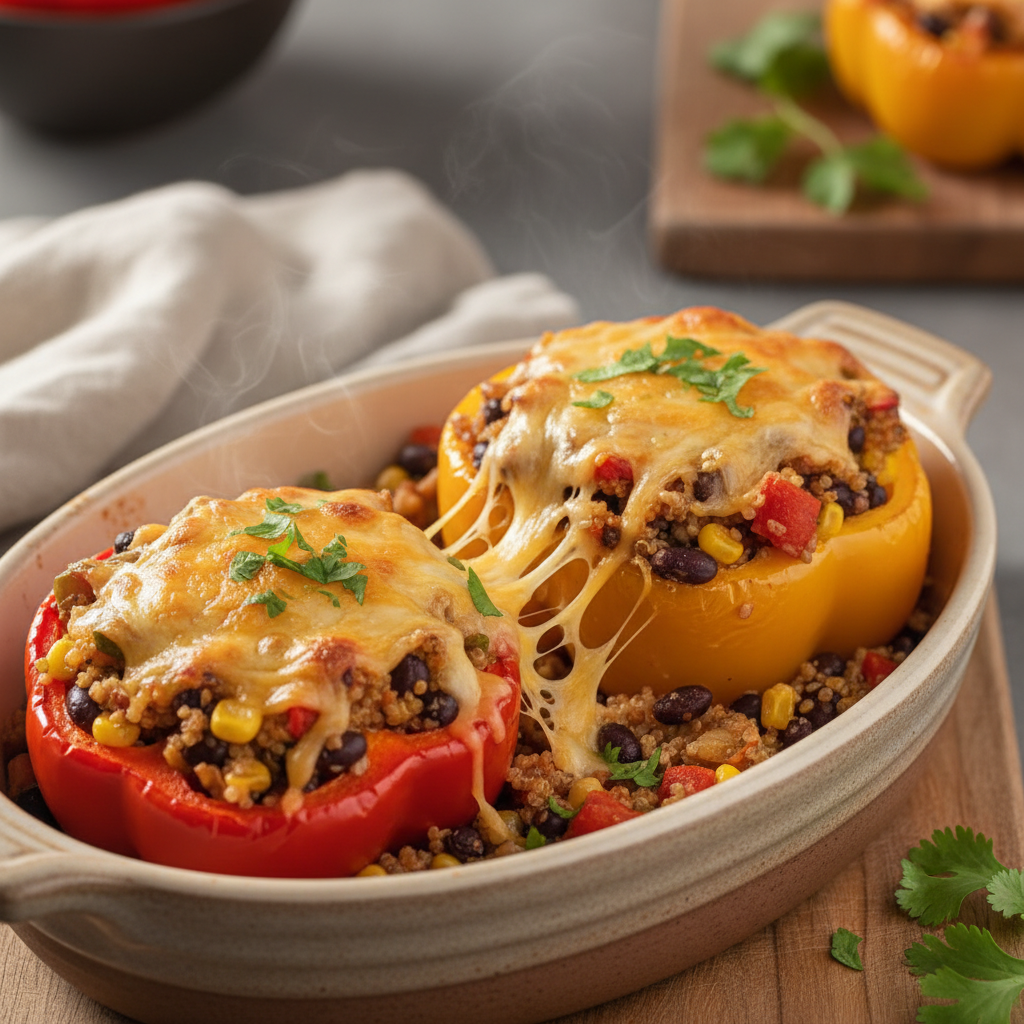
4) Stuff and bake: spoon filling into peppers, pack lightly (don’t mash it down). Cover with foil and bake 20 minutes, then uncover, add cheese, and bake 8–12 minutes more until peppers are tender and cheese melts.
5) Rest briefly: 5 minutes. The filling sets a bit, and the peppers are easier to lift out without tearing.
Flavor upgrades that don’t add much work
Vegetarian stuffed bell peppers can taste “healthy” in the boring way if you don’t add contrast. You want salty, spicy, and bright in the same bite.
- Add acidity: squeeze lime over the finished peppers, or stir a teaspoon of vinegar into the filling.
- Add umami: a spoon of tomato paste in the pan, or a sprinkle of nutritional yeast if you like it.
- Use a bolder sauce: thick enchilada sauce instead of salsa, or a roasted salsa verde.
- Texture matters: top with crushed tortilla chips, pepitas, or chopped scallions right before serving.
According to USDA FoodData Central, bell peppers provide vitamin C and other nutrients, which is a nice bonus, but taste still comes from seasoning and balance.
Swap table: mix-and-match filling ideas
If you’re cooking for different preferences (or you just want to use what you already have), these swaps usually work without changing the bake time much.
| Base | Swap options | What to watch |
|---|---|---|
| Grain | Brown rice, quinoa, cauliflower rice, couscous | Cauliflower rice releases water; simmer longer before stuffing |
| Protein | Black beans, lentils, chickpeas, plant-based crumbles | Lentils need seasoning; crumbles may already be salty |
| Veg | Zucchini, spinach, mushrooms, roasted sweet potato | Mushrooms shrink and can get watery; cook them down first |
| Cheese | Cheddar, pepper jack, feta, vegan shreds | Feta browns faster; add near the end |
| Seasoning | Taco seasoning, Italian herbs, curry powder | Curry can dominate; start small and taste as you go |
Practical tips: make them hold their shape and reheat well
The biggest difference between “pretty enough for guests” and “sad pepper puddle” comes down to moisture control and timing.
- Choose sturdy peppers: thicker-walled peppers tend to stand up better in the oven.
- Thicken the filling: if it looks loose in the pan, it will be looser after baking. Simmer longer or add a little extra grain.
- Don’t drown the dish: a few tablespoons of water in the baking dish helps steam, but too much turns into soup.
- Reheat smart: oven or air fryer keeps texture better than microwave, though microwave is fine for speed.
For food safety, cool leftovers promptly and reheat until hot throughout. If you have specific dietary needs or health concerns, it’s reasonable to check guidance from a qualified professional.
Common mistakes (and the quick fixes)
People often blame the recipe, but it’s usually one small step.
- “My peppers are still crunchy”: cover with foil longer, or pre-bake empty peppers for 10 minutes before stuffing.
- “Filling is bland”: salt the filling more than you think, add lime, and use a spice blend with enough punch.
- “Everything is watery”: use thicker salsa, cook down tomatoes, and avoid adding raw zucchini straight into the mix.
- “Cheese burned”: add cheese later and keep the dish on the middle rack.
Serving ideas that make it feel like a full dinner
Stuffed bell peppers already cover a lot, but sides can make the meal feel more complete without adding chaos.
- Simple salad with a tangy vinaigrette
- Guacamole or sliced avocado
- Roasted broccoli or sheet-pan veggies
- Hot sauce, pico de gallo, or extra salsa for the table
Key takeaways before you start
- Cook the filling fully so flavor doesn’t depend on oven time.
- Keep moisture under control by simmering the mixture until thick.
- Cover first, uncover later for tender peppers and nicely melted cheese.
- Finish with acid and crunch so the bite tastes bright, not heavy.
Conclusion: a meatless dinner you’ll actually repeat
Easy vegetarian stuffed peppers work because they’re flexible, forgiving, and they reheat like a champ. Once you treat the filling like a standalone skillet meal, the rest is just stuffing and baking.
If you want a low-effort next step, pick one upgrade, either lime and cilantro for brightness or a crunchy topping for texture, then keep the rest basic. That’s usually the difference between “fine” and “can we have this again?”
FAQ
Do I need to pre-cook peppers before stuffing them?
Often you can skip it if you bake covered long enough, but if you like very tender peppers, pre-baking the empty halves for about 10 minutes helps.
Can I make stuffed bell peppers ahead of time?
Yes. Many people prep the filling and peppers separately, then stuff and bake the next day. If you assemble ahead, expect a few extra minutes of bake time.
What’s the best rice for vegetarian stuffed peppers?
Any cooked grain works. White rice stays soft, brown rice brings chew, quinoa feels lighter. The key is using it cooked so the texture stays predictable.
How do I keep the filling from falling out?
Pack the filling gently and choose peppers that sit flat in the baking dish. If they wobble, crumple a little foil to create “supports” between halves.
Can I freeze vegetarian stuffed bell peppers?
Usually yes. Freeze after baking and cooling, then reheat in the oven covered. Texture can soften a bit, especially with higher-moisture fillings.
How do I make them vegan without losing flavor?
Use a dairy-free cheese you like, or skip cheese and finish with a creamy topping such as cashew sauce, plus something punchy like salsa verde and lime.
Are stuffed bell peppers healthy?
They can be, depending on portions and ingredients. If you’re managing sodium, check canned beans and salsa labels, and adjust seasoning to fit your needs.
If you’re trying to get vegetarian dinners on the table more often, keep a “pepper night” pantry setup on hand: a box of cooked grains, canned beans, and a salsa you actually enjoy. It turns stuffed peppers into an easy default instead of a special project.