
How to cook sausage in oven healthy comes down to two things: choosing a better sausage, and using oven techniques that let fat render out without drying the meat.
If you have ever pulled sausages from the oven and found them either greasy or weirdly tough, you are not alone, it usually happens when the heat is too high, the pan setup traps fat, or the sausage type is extra fatty to begin with.
This guide stays practical, oven temps that work in real kitchens, simple swaps that cut saturated fat and sodium, and a few “don’t bother” moves people waste time on.
What “healthy oven sausage” realistically means
For most people in the US, “healthy” with sausage usually means less saturated fat, less sodium, and fewer burnt bits, while still hitting a satisfying protein-centered meal. It does not have to mean bland, it means being intentional.
According to the American Heart Association, it helps to limit saturated fat as part of a heart-smart pattern, and sausage is one of those foods where saturated fat can climb quickly depending on the meat and processing.
Also, “healthy” can be personal, if you manage blood pressure, sodium matters more, if you manage calories, portion and add-ons matter more, and if you are pregnant or immunocompromised, food safety becomes the main priority, so adjust based on your situation and consider asking a clinician or dietitian if you have medical constraints.
Why oven cooking can be a healthier method than pan-frying
The oven is not magically healthier, but it makes a few helpful things easier.
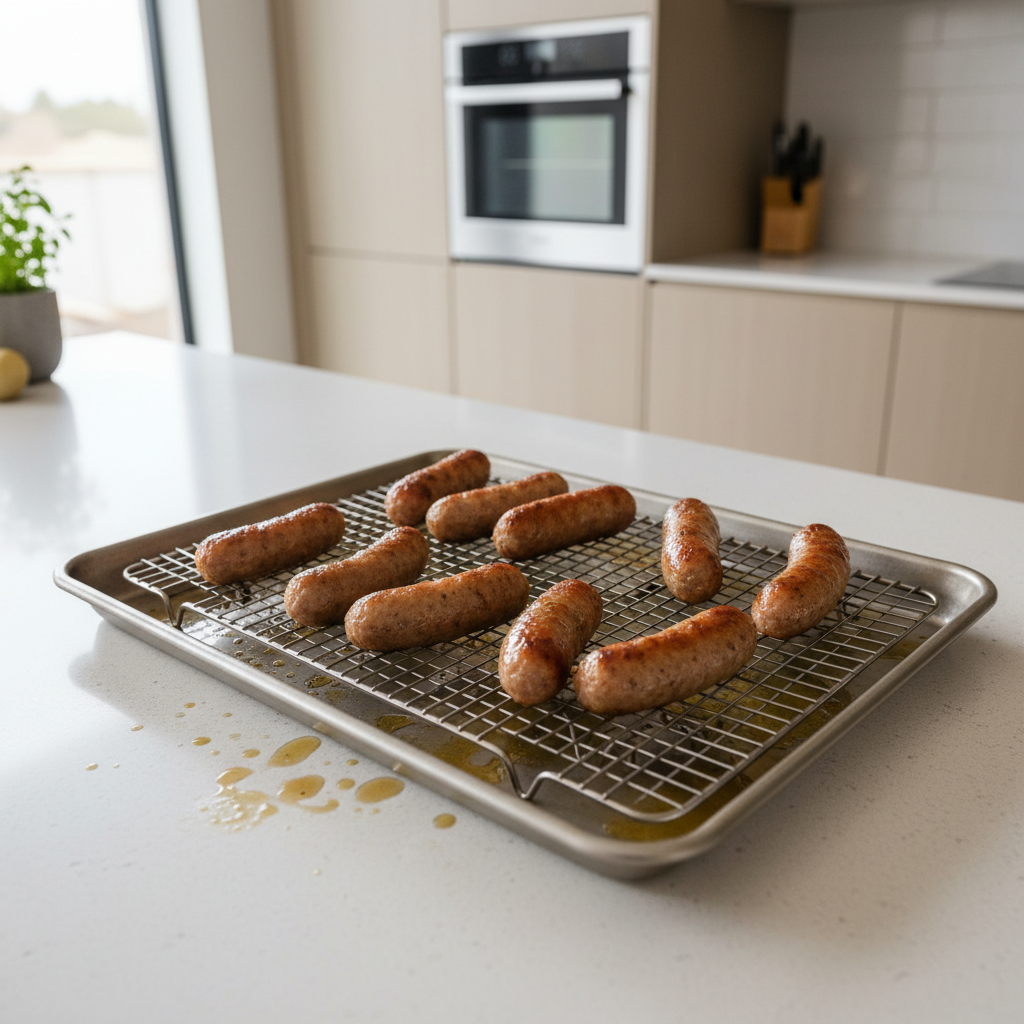
- Fat can render and drip away if you use the right rack or pan setup, instead of bathing the sausage like it can in a skillet.
- Less added oil, a sheet pan often needs none, or just a light spray for vegetables.
- More even heat, fewer scorched spots, less smoke, and better control of browning.
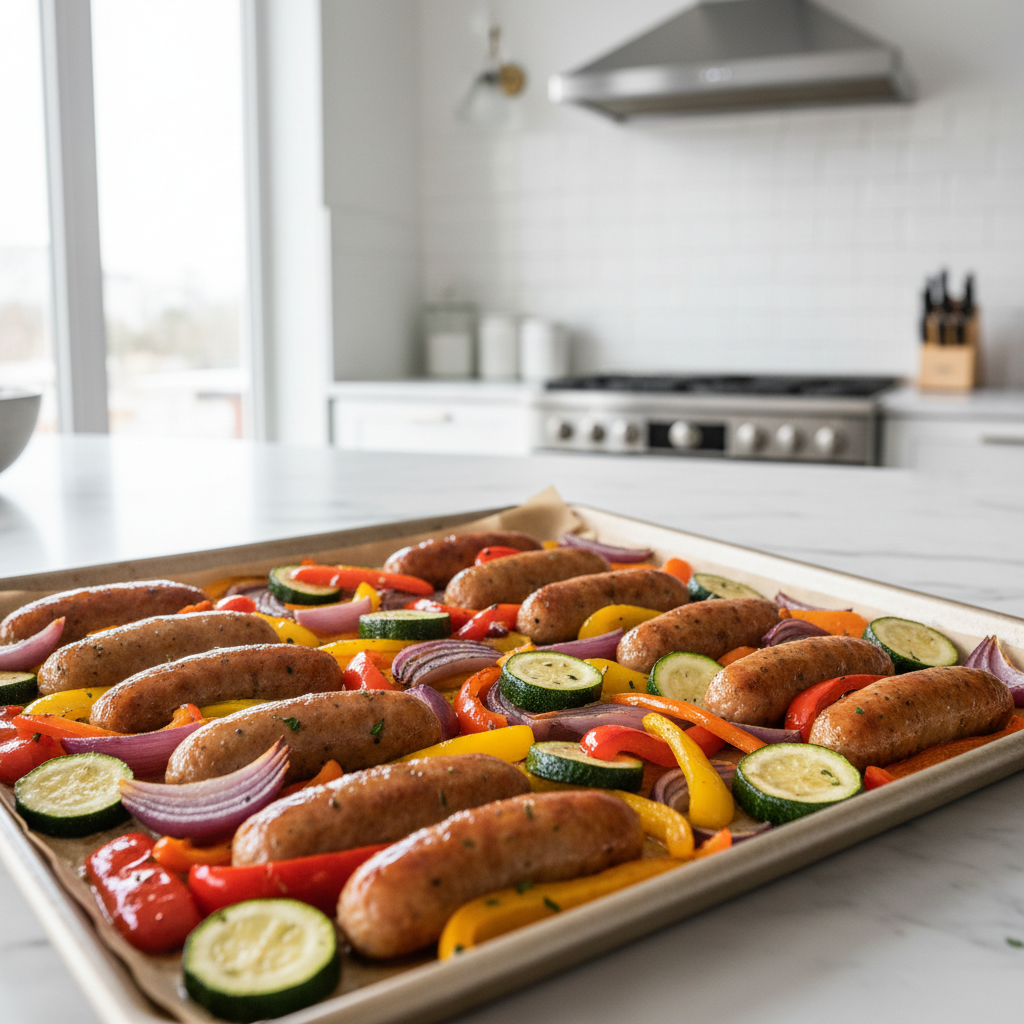
- Batch cooking, you can cook sausages and veggies together, which makes a balanced plate more likely.
But a common trap is using a high-sided dish, the fat pools, the sausages “fry” in it, and you end up with the opposite of what you want.
Quick checklist: pick a sausage that supports your goal
You can do everything “right” in the oven and still end up with a heavy meal if the sausage itself is extremely fatty or salty, so start here.
At the store, scan for these signals
- Protein-forward options: chicken or turkey sausage often runs leaner than pork, but not always, check the label.
- Lower saturated fat: compare brands, some “chicken” links still use skin or added fat.
- Lower sodium: many sausages are heavily salted, if you watch blood pressure, prioritize this line.
- Shorter ingredient list: not a perfect rule, but a lot of add-ins usually means more sodium and additives.
- Fresh vs. cured: cured sausages can be higher in sodium, and some people prefer to limit them.
A simple decision table
| What you care about most | What to buy more often | What to limit |
|---|---|---|
| Lower calories | Chicken/turkey links, smaller links, fresh-style | Jumbo links, heavily marbled pork |
| Lower saturated fat | Lean poultry sausage, plant-based (if you tolerate it) | Pork-heavy, “extra juicy” blends |
| Lower sodium | “Reduced sodium” versions, unseasoned or lightly seasoned | Cured, smoked, strongly flavored varieties |
| Cleaner browning, less charring | Fresh sausages you can bake gently then finish | High-sugar glazes, sticky marinades early on |
How to cook sausage in oven healthy: the core method (works for most links)
How to cook sausage in oven healthy is mostly about moderate heat, airflow, and spacing, so the casing browns while excess fat escapes.
Base temperature and timing
- Oven temp: 400°F is the sweet spot for many sausages, hot enough to brown, not so hot you scorch quickly.
- Typical time: often 18–25 minutes for standard links, thicker sausages can run longer.
- Flip once: around the halfway point, especially if you do not use a rack.
Pan setup options (choose one)
- Best for draining fat: wire rack over a rimmed sheet pan, lined with foil for easy cleanup.
- Good and simple: parchment-lined sheet pan, but you may want to blot grease after cooking.
- When cooking with vegetables: spread vegetables around the sausages, keep everything in a single layer so steam does not build up.
Food safety don’t-skip
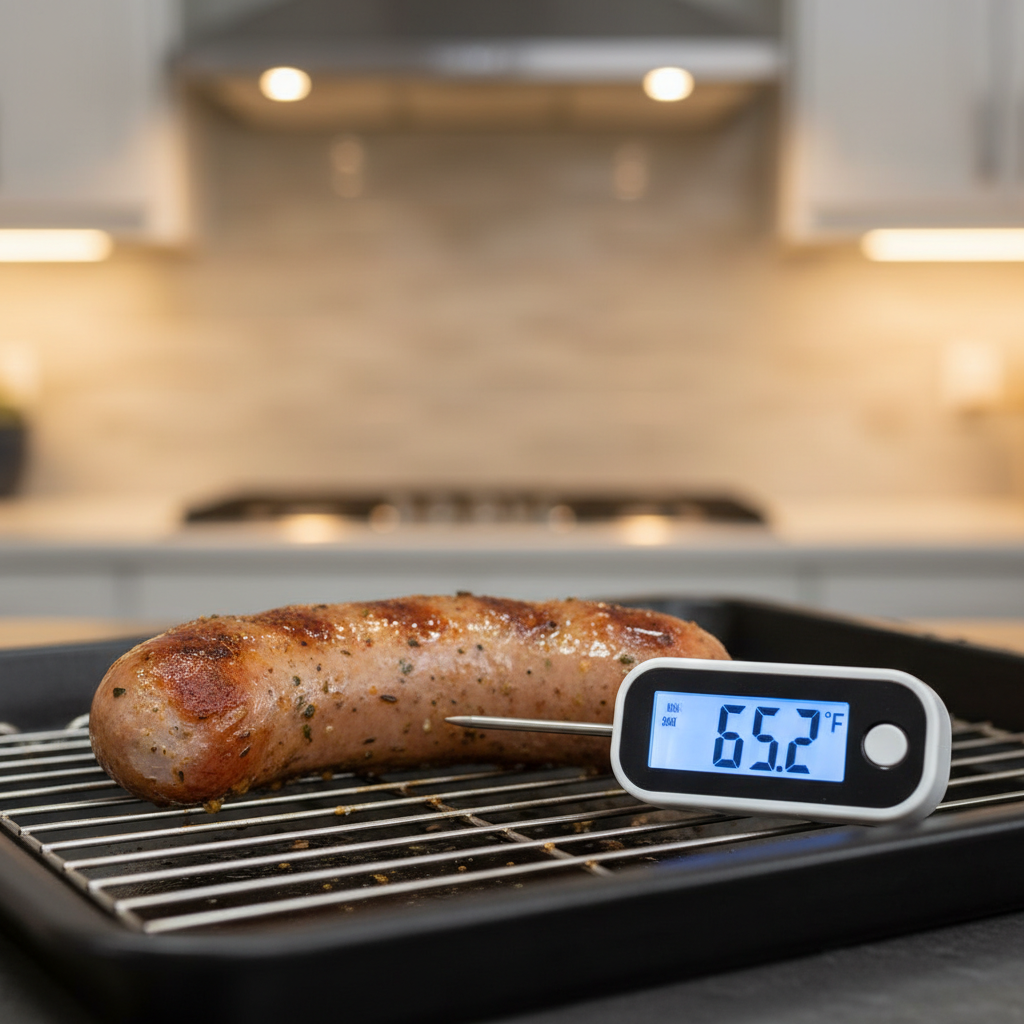
According to the USDA, you should cook raw sausage to a safe internal temperature, so use a thermometer rather than guessing by color. Many raw sausages are considered safe at 160°F, while poultry sausages are often held to 165°F, but labels and guidance can vary, so check the package and follow USDA recommendations for your specific product.
Practical tip: pull the tray a touch early and check the thickest link, then add 2–4 minutes if needed, it prevents the “dry outside, barely safe inside” cycle.
Healthy upgrades that make a bigger difference than you think
People often focus on tiny hacks, but the bigger wins come from how you build the meal around the sausage.
Pair with high-volume sides
- Sheet-pan vegetables: peppers, onions, broccoli, zucchini, cauliflower, Brussels sprouts.
- Quick salad: something acidic like lemon or vinegar dressing balances richness.
- Whole grains in a measured portion: brown rice, quinoa, farro, or whole wheat rolls if you really want a sandwich.
Use flavor strategies that do not rely on extra fat
- Acid at the end: squeeze of lemon, splash of red wine vinegar, pickled onions.
- Spices and aromatics: smoked paprika, fennel seed, garlic, chili flakes.
- Mustard-based sauces: often feel “rich” without needing much oil.
Portioning that feels normal
If you are trying to eat lighter, consider one link plus vegetables rather than two links plus bread, it sounds obvious, but this is where most “healthy sausage” plans quietly fall apart.
Common mistakes that make oven sausage less healthy (or just bad)
- Roasting too hot for too long: you get bitter, dark spots, and the kitchen smells like smoke, moderate heat wins.
- Cooking in a pool of grease: high-sided pans and crowded trays trap rendered fat, use a rack or give space.
- Piercing repeatedly to “drain fat”: a couple tiny vents might reduce bursting, but lots of pokes can dry the sausage and push juices out, which makes you compensate with sauce or bread.
- Adding sugary glaze early: it burns before the sausage finishes, add near the end if you use it at all.
- Skipping a thermometer: guessing usually leads to overcooking “just to be safe,” which makes dinner feel like punishment.
Practical game plans for different real-life scenarios
If you want the lowest-effort healthy dinner
- Heat oven to 400°F.
- Set a rack on a sheet pan, place sausages with space between.
- Roast, flip once, cook to safe internal temp.
- While it cooks, throw together bagged salad, finish with lemon.
If you cook for a family and need it to be filling
- Use a sheet pan meal: sausages plus a lot of vegetables.
- Add a single “comfort” carb: potatoes cut small, or a measured serving of rice after.
- Serve mustard, salsa verde, or chimichurri-style herbs rather than creamy dips.
If you are watching sodium
- Choose reduced-sodium sausage when possible.
- Skip salty sides like boxed mac and cheese, chips, or heavily seasoned frozen sides.
- Build flavor with acid, herbs, garlic, and pepper.
If you meal-prep for the week
- Cook a batch, cool quickly, and store in airtight containers.
- Reheat gently, over-high heat makes them tough fast.
- Rotate usage: salads, grain bowls, wraps, not the same plate five days straight.
Key takeaways and a simple conclusion
If you remember one thing, make it this: moderate oven heat plus a draining setup gets you browned sausage without turning dinner into a grease slick.
- Pick the right link: check saturated fat and sodium, “chicken” does not always mean lighter.
- Use 400°F as your default: then verify doneness with a thermometer.
- Make the plate healthier: more vegetables, smart sauces, reasonable portions.
If you want to put this into action tonight, start with one change that feels easy, swap the pan setup to a rack, or add a full sheet pan of vegetables, either one usually improves the outcome immediately.