
Lemon bars recipe searches usually come from the same frustration: the crust turns soft, the filling cracks or tastes “eggy,” and the bars refuse to slice neatly.
This version aims for what most people actually want at home, a crisp shortbread base, a bright tangy center, and a finish that looks bakery-clean without being fussy.
Along the way, you’ll get a quick troubleshooting guide, a timing table, and a few small choices that make a big difference, like when to dust powdered sugar and why room-temperature eggs matter.
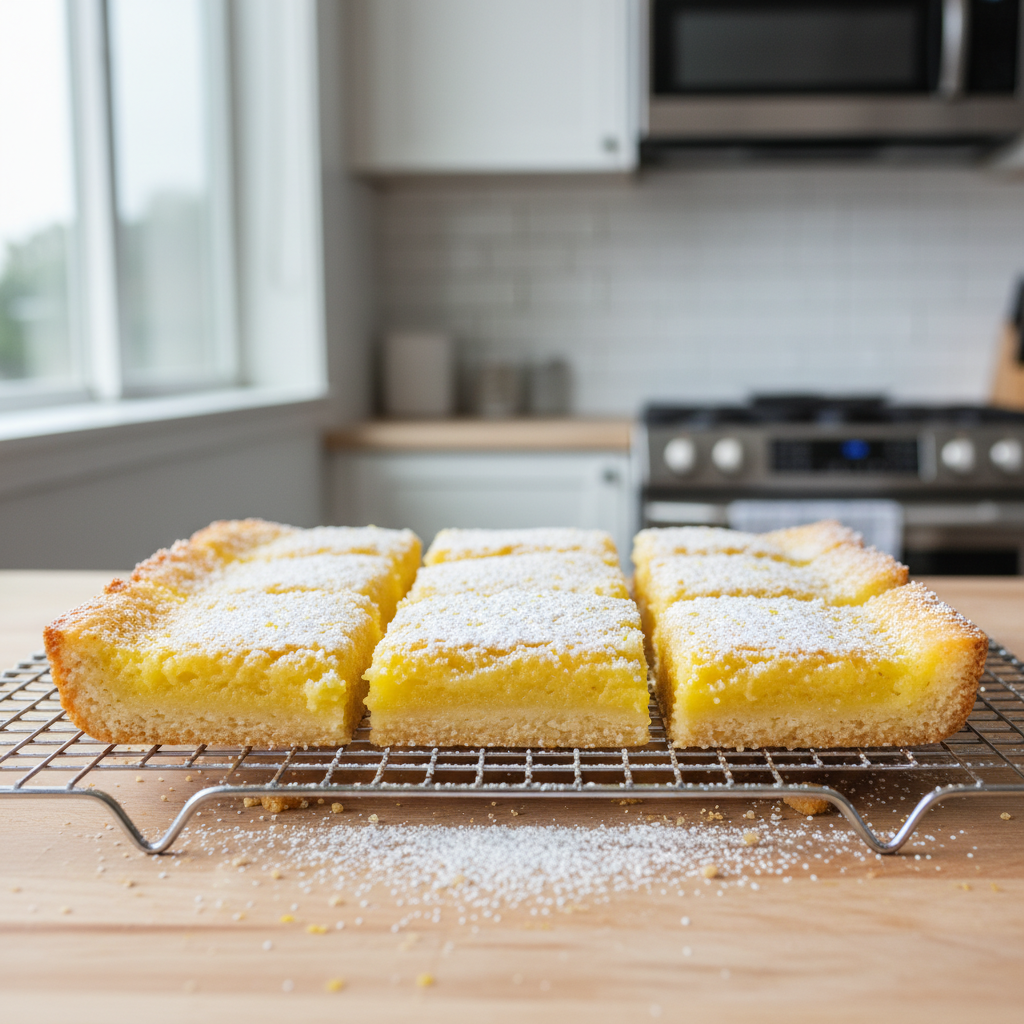
What makes lemon bars “work” (and why many don’t)
Good lemon bars are basically a texture balancing act: a dry, buttery crust under a custard-like filling that sets without becoming rubbery. When either side goes off, the whole pan feels disappointing.
- Soggy crust usually comes from underbaking the base or pouring filling onto a crust that never fully set.
- Curdled or “eggy” filling often shows up when oven heat runs high or the bake goes too long.
- Cracks can happen when the filling overbakes or cools too fast.
- Flat flavor is typically not enough lemon juice/zest, or using bottled juice when you expected “fresh.”
According to USDA Food Safety and Inspection Service, eggs should be cooked until set, and leftovers should be refrigerated promptly, so the goal here is a center that’s set with a slight jiggle, not wet.
Ingredients and smart substitutions
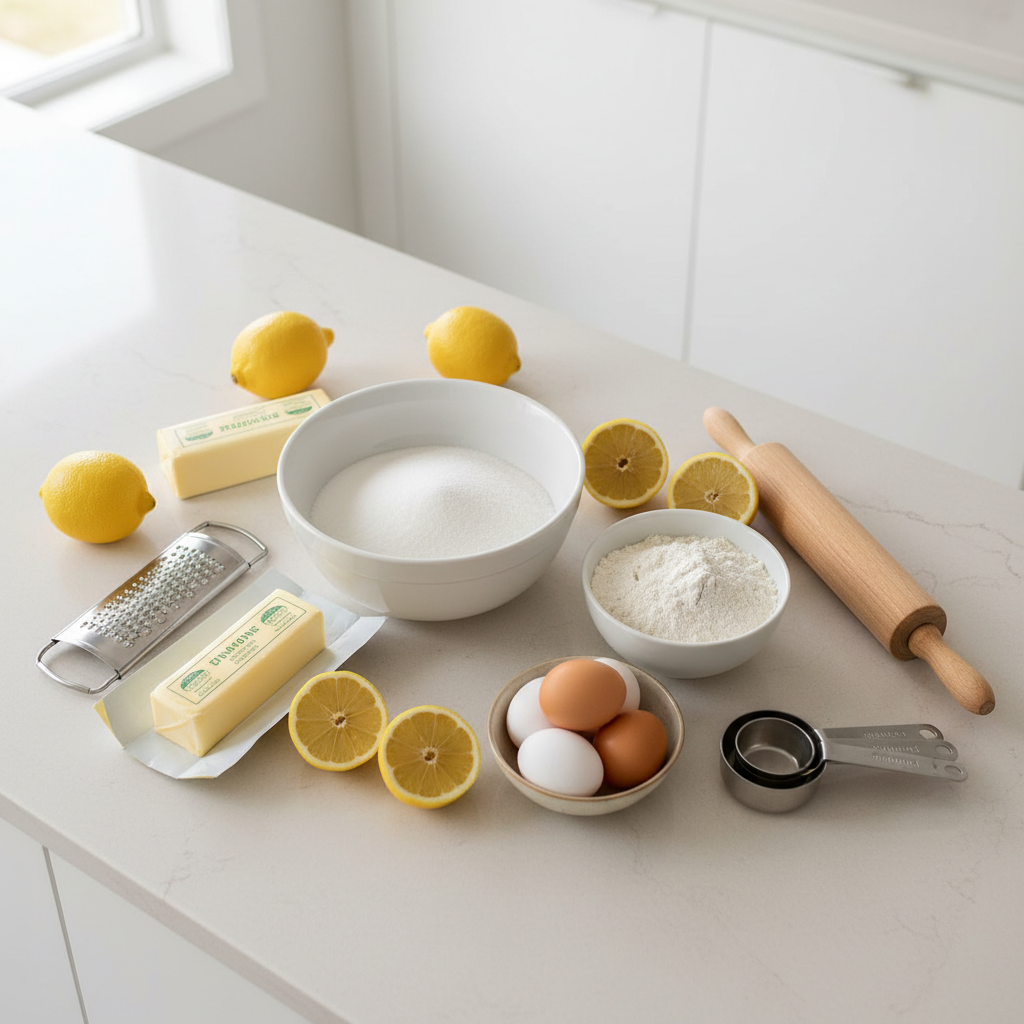
You don’t need unusual ingredients, but you do want the right roles covered: fat for the crust, acidity for the punch, and enough starch to keep the filling sliceable.
For the shortbread crust
- Unsalted butter
- Granulated sugar
- All-purpose flour
- Pinch of salt
For the lemon filling
- Eggs (large)
- Granulated sugar
- Fresh lemon juice
- Lemon zest
- All-purpose flour (or a bit of cornstarch for extra insurance)
- Powdered sugar for topping
Substitution notes that usually behave well: salted butter works if you reduce added salt, and gluten-free 1:1 flour often works in the crust, though texture varies by brand. For flavor, fresh lemon juice tends to taste brighter than bottled.
Easy lemon bars recipe: step-by-step (8x8 or 9x9 pan)
This lemon bars recipe is built around two decisions: bake the crust until it looks lightly golden, and pull the filling when the center is set but still gently wobbly.
1) Prep
- Heat oven to 350°F.
- Line an 8x8 or 9x9 pan with parchment, leaving overhang for lifting.
- Optional but helpful: lightly grease the parchment corners so it sits flat.
2) Make and bake the crust
- Cream butter and sugar until smooth, then mix in flour and salt just until combined.
- Press firmly into the pan, especially corners.
- Bake until the top looks dry and the edges turn pale golden, usually 18–22 minutes depending on pan size and oven.
3) Mix the filling while the crust bakes
- Whisk sugar, flour (and cornstarch if using) to break up lumps.
- Add eggs and whisk until smooth.
- Whisk in lemon juice and zest.
Small but important: room-temperature eggs blend more smoothly, which can reduce foamy bubbles and uneven setting.
4) Bake the filling
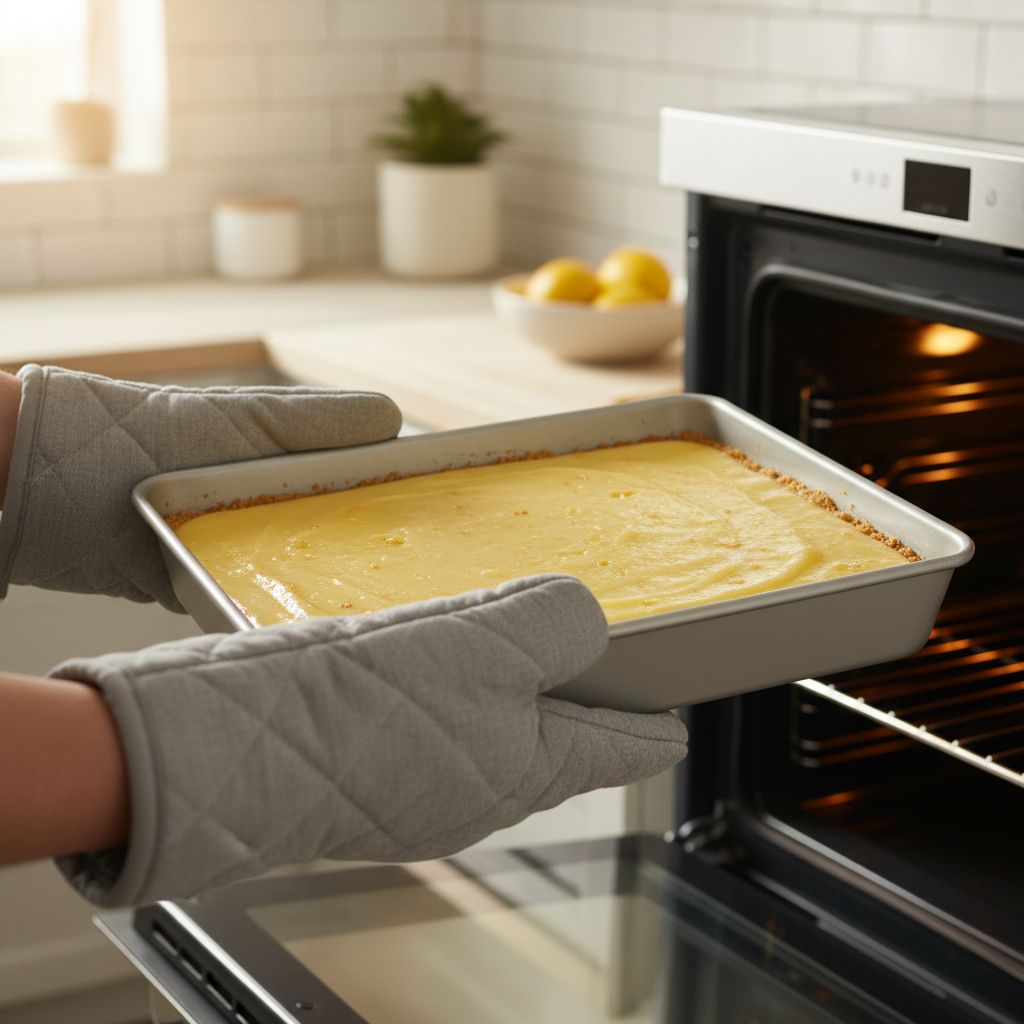
- Pour filling onto the hot crust as soon as it comes out.
- Bake until the edges are set and the center has a slight jiggle, typically 18–25 minutes.
- Cool at room temperature, then chill before slicing.
5) Slice cleanly
- Chill 2–3 hours for the neatest cuts.
- Lift using parchment, then cut with a long knife wiped clean between cuts.
- Dust powdered sugar right before serving to avoid it “melting” into the top.
Timing + doneness table (quick reference)
Ovens vary, and glass pans often bake differently than metal, so use visuals and jiggle as your main guides, with this table as a baseline.
| Step | What you’re looking for | Typical time |
|---|---|---|
| Crust bake | Top looks dry, edges lightly golden | 18–22 min |
| Filling bake | Edges set, center gently wobbles | 18–25 min |
| Cool on counter | Pan no longer warm, surface stable | 60–90 min |
| Chill before slicing | Fully set for clean squares | 2–3 hrs |
Common problems and fixes (real-world troubleshooting)
If your last batch went sideways, it was probably one of these, and the fix is usually simple, not a full recipe overhaul.
- Crust separates from filling: crust cooled too much before filling went in, pour filling onto a hot crust next time.
- Filling bubbles or browns on top: oven runs hot, check with an oven thermometer, or move the rack slightly lower.
- Runny center after cooling: underbaked filling or too much juice for the flour amount, bake a few minutes longer until the center jiggle is smaller.
- Rubbery texture: overbaked, pull earlier, the filling continues setting as it cools.
- Powdered sugar disappears: dust too early, wait until just before serving.
Make-ahead, storage, and food-safety notes
Lemon bars are one of those desserts that often taste better after chilling, so making them ahead is not a compromise.
- Make-ahead: bake the day before, chill overnight, dust sugar before serving.
- Refrigerator: keep covered, and return to the fridge within 2 hours at room temperature.
- Freezer: freeze cut bars (no powdered sugar), wrapped well, then thaw in the fridge and dust before serving.
According to FDA, perishable foods should not sit at room temperature for more than 2 hours, and that includes egg-based desserts in many home settings, especially in warm kitchens.
Practical upgrades if you want them (not required)
This lemon bars recipe is intentionally straightforward, but a couple of tweaks can shift it toward your favorite style.
- Extra tang: add more zest, not just more juice, zest boosts aroma without loosening the set.
- Thicker bars: use an 8x8 pan and don’t rush chilling time.
- Softer bite: slightly underbake the crust so it stays tender, just expect less crispness.
- Neat presentation: trim edges after chilling, then cut into clean squares.
Key takeaways before you start
- Bake the crust until lightly golden, pale crust often turns soggy later.
- Pour filling onto a hot crust so it bonds and sets evenly.
- Pull the pan when the center still has a gentle wobble, carryover heat finishes the job.
- Chill before slicing, warm lemon bars almost always look messy.
Conclusion: a simple path to tangy-sweet lemon bars
If you keep two things consistent, hot crust and a correctly set filling, this style of lemon bars tends to come out reliably tangy-sweet with clean slices.
Pick a pan size, follow the doneness cues instead of chasing exact minutes, and give the bars time to chill, then dust and serve. If you want, make a second batch later with more zest or a thicker cut, that’s usually the easiest way to “customize” without risking the texture.
FAQ
Why did my lemon bars crack on top?
Cracks usually point to overbaking or an oven that runs hotter than the dial says. Pull the pan when the center still jiggles slightly, and consider checking oven temperature with a thermometer.
Can I use bottled lemon juice for lemon bars?
You can, and many people do, but the flavor may taste flatter. If you go bottled, adding fresh zest helps recover some brightness.
How do I know the filling is set without overbaking?
Look for set edges and a center that moves like a gentle wobble, not liquid. The filling continues to firm as it cools and chills, so “a little under” is often safer than “a little over.”
Should I refrigerate lemon bars recipe leftovers?
In many home kitchens, yes, because the filling contains eggs. Store covered in the refrigerator, and dust powdered sugar right before eating for the best look.
Why is my crust sticking even with parchment?
Sometimes butter leaks and caramelizes at the edges, acting like glue. Leaving parchment overhang, greasing the corners lightly, and letting bars fully chill before lifting usually fixes it.
Can I double this lemon bars recipe in a 9x13 pan?
Usually, yes, doubling works well in a 9x13. Expect longer bake times and rely on visual cues, especially the center jiggle, rather than exact minutes.
How far ahead can I make lemon bars?
They typically hold up well for a couple of days refrigerated, and many people prefer the flavor after an overnight chill. For longer storage, freezing cut bars (without powdered sugar) is a practical option.
My lemon filling tastes too sweet, how can I adjust next time?
Increase zest first, it adds sharpness without changing the set. Reducing sugar can work, but it may shift texture, so adjust in small steps and note results.
If you’re baking for a party or just tired of trial-and-error, save this lemon bars recipe, print the timing table, and treat the doneness cues as your “real instructions,” that’s what usually makes the next batch feel easy.