
Homemade taco seasoning is the quickest way to fix “these tacos taste flat” without running back to the store, and it takes about five minutes with spices you probably already have.
If you’ve ever opened a packet and thought, “Why is this so salty?” or “Why does it taste kind of… one-note,” making your own blend is a small upgrade that shows up in every bite. You control heat, salt, and that toasty chili-cumin vibe that makes tacos taste like tacos.
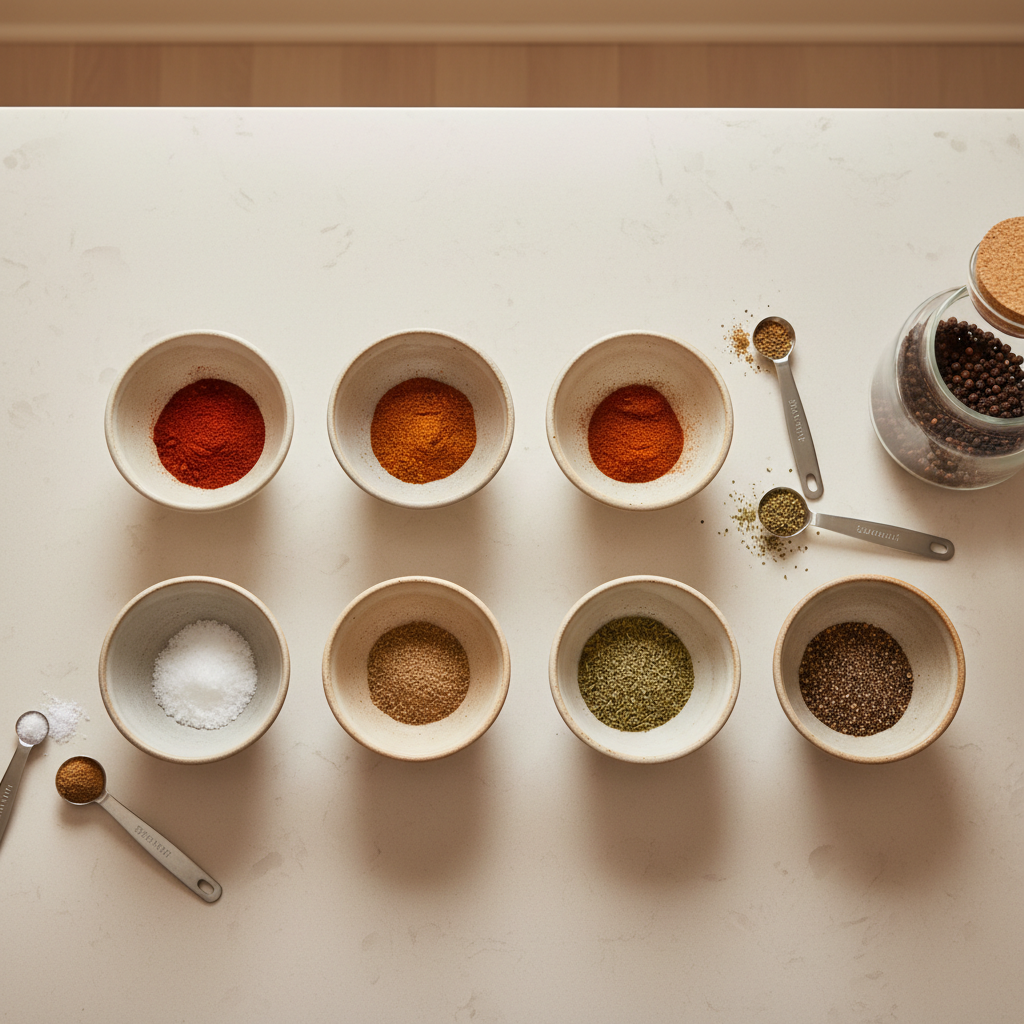
Below is a reliable base recipe, plus the real-world tweaks people actually need: low-sodium, mild for kids, spicier for heat lovers, and options for different proteins. You’ll also get storage tips so the flavor stays bright.
What makes a good taco seasoning (and why packets taste different)
A solid taco blend balances four things: chili flavor, warmth, savoriness, and salt. Packets often lean heavy on salt and thickeners, because they’re designed to be “one-size-fits-most” and work with a specific amount of water.
When you make your own, you can keep the flavor-forward spices high and the salt adjustable. According to the USDA, sodium can add up quickly in packaged and prepared foods, so controlling salt is one of the most practical reasons people switch to DIY blends.
- Chili powder brings the main taco flavor (it’s usually a blend, not pure ground chiles).
- Cumin adds earthy warmth, it’s the “taco smell” most people recognize.
- Garlic/onion powder give savory depth without needing fresh aromatics every time.
- Paprika rounds things out; smoked paprika adds a subtle grill note.
- Oregano (Mexican oregano if you have it) lifts the whole mix.
Easy Homemade Taco Seasoning Mix (base recipe)
This is the everyday version I’d keep in a jar. It’s medium heat for most households, and it works for beef, turkey, chicken, beans, or roasted veggies.
Ingredients (makes about 1/4 cup, ~4 tablespoons)
- 2 tbsp chili powder
- 1 tbsp ground cumin
- 1 tsp smoked paprika (or regular paprika)
- 1 tsp garlic powder
- 1 tsp onion powder
- 1 tsp dried oregano
- 1/2 tsp fine salt (optional, adjust later)
- 1/4 tsp black pepper
- 1/4 tsp crushed red pepper flakes or cayenne (optional)
How to make it
- Whisk all spices in a bowl until the color looks even.
- Taste a pinch (it should taste a bit strong dry, it mellows in food).
- Pour into a small jar with a tight lid.
Quick key point: If your chili powder is old, your blend will taste “dusty.” Fresh spices matter more here than fancy technique.
How much to use (and how to season meat the right way)
The most common frustration is getting the flavor to “stick” to the meat instead of tasting like spices sprinkled on top. A little moisture and simmer time fixes that.
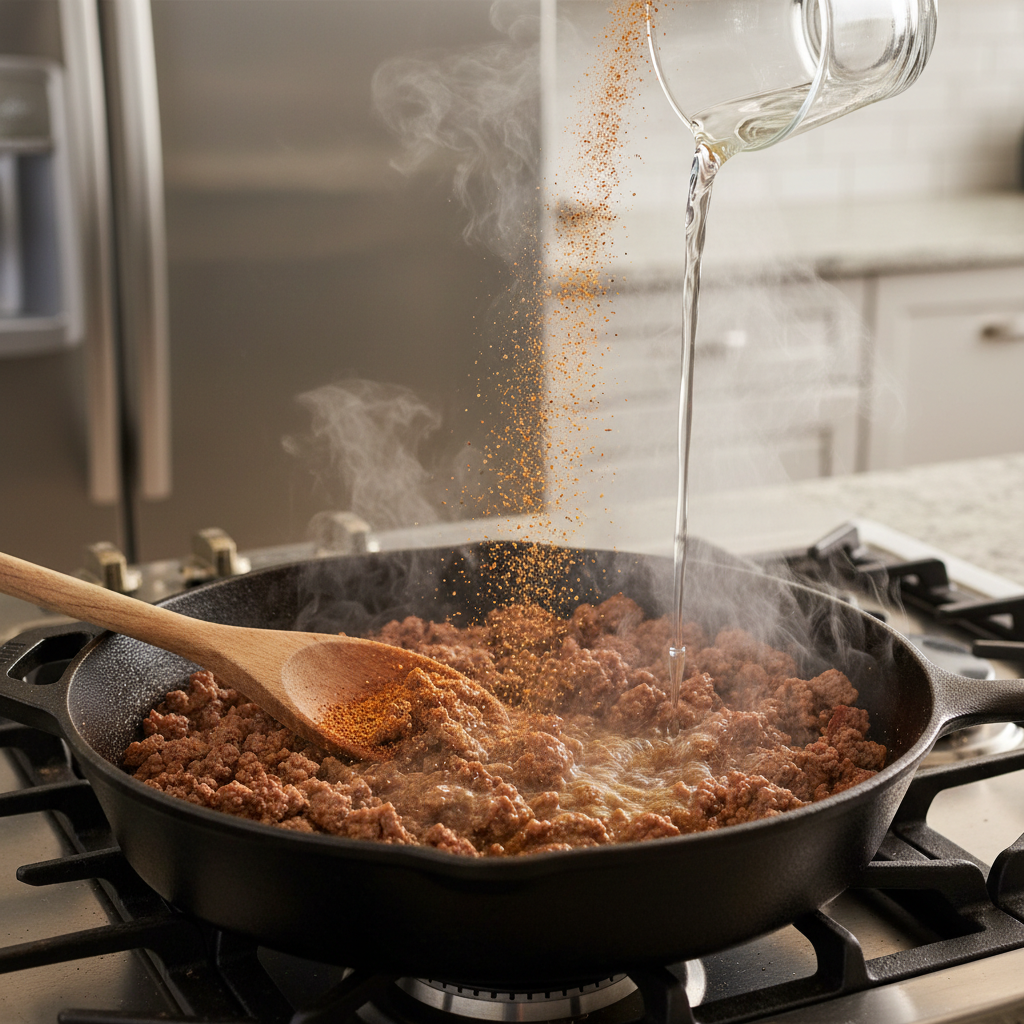
- For 1 lb ground meat: start with 2 tbsp seasoning + 1/3 cup water.
- Brown meat, drain excess fat if needed.
- Sprinkle seasoning evenly, stir for 30 seconds.
- Add water, simmer 2–4 minutes until saucy.
For chicken thighs or breasts: use 1–1.5 tbsp per pound as a dry rub, then cook. Finish with a squeeze of lime or a spoon of salsa to wake the spices up.
For beans or veggies: start with 1–2 tsp per can of beans or per sheet pan of vegetables, then adjust after cooking.
Customization guide: mild, spicy, smoky, and low-sodium
This is where homemade taco seasoning earns its keep. You’re not locked into one packet profile, you can dial it to the people eating dinner.
| Goal | What to change | What to expect |
|---|---|---|
| Mild (kid-friendly) | Skip cayenne/red pepper; use sweet paprika | Warm, not spicy |
| Spicier | Add 1/4–1/2 tsp cayenne; add chipotle powder if you have it | Heat builds after a few bites |
| Smoky “street taco” vibe | Use smoked paprika; add a pinch of chipotle powder | Deeper, grilled flavor |
| Low-sodium | Keep salt out of the jar; salt the meat while cooking instead | More control, less risk of over-salting |
| Slightly sweeter | Add 1/4 tsp brown sugar (optional) | Rounder flavor, great for turkey |
If you’re cooking for someone with specific dietary needs, it’s smart to run changes by a qualified professional. Spice blends look simple, but sodium and additives can matter a lot in some situations.
Storage, shelf life, and batch size (so it stays fresh)
Spices don’t “go bad” in a dramatic way, they just fade. A taco blend with muted cumin or chili tastes like cardboard, and people blame the recipe when it’s really the pantry.
- Best container: a small glass jar with a tight lid, kept in a cool, dark cabinet.
- Typical freshness window: many blends taste best within 3–6 months, depending on how fresh the spices were when mixed.
- Make-ahead size: double the recipe if you cook tacos weekly, otherwise keep it smaller.
- Label it: write the mix date on tape, future-you will appreciate it.
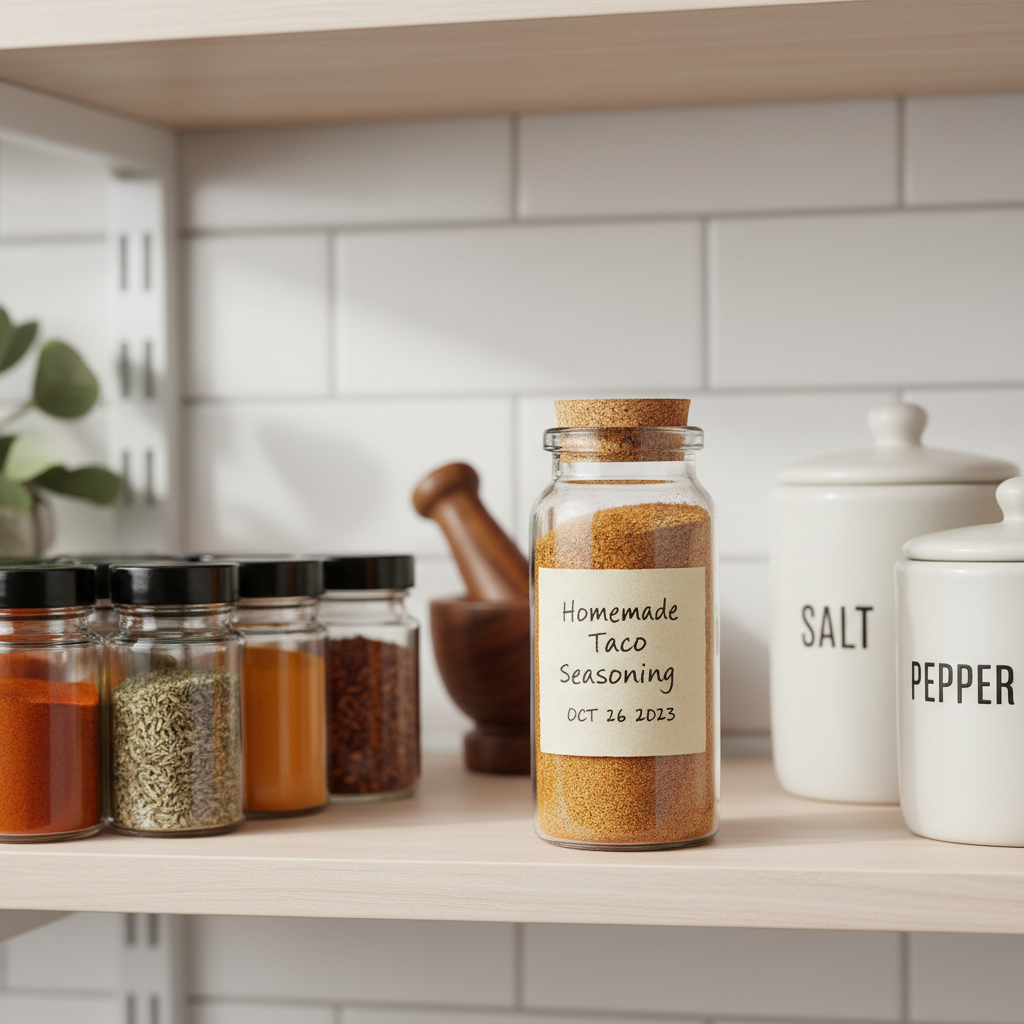
Key takeaway: If you want your homemade taco seasoning to taste bold, refresh cumin and chili powder more often than you think you need.
Common mistakes (and quick fixes)
- It tastes bitter: too much oregano or burnt spices. Fix by using less oregano next time, and add seasoning after browning, not during high heat.
- It tastes bland: spices may be old, or you need a bit more salt or acid. Try a pinch of salt and a squeeze of lime at the end.
- It’s too spicy: dilute with more meat/beans, add a little tomato (salsa or sauce), and serve with dairy toppings like sour cream.
- It’s too salty: add more water and simmer, or add extra unseasoned ingredients (beans, rice). Next time, keep salt out of the jar.
- It’s dusty/chalky: too much dry seasoning with no simmer time. Add water, simmer a few minutes until saucy.
Practical ways to use it beyond tacos
Once you have a jar, you’ll reach for it more than you expect. Just keep in mind it’s concentrated, start small and adjust.
- Taco soup or chili: 1–2 tbsp adds warmth fast.
- Sheet-pan fajita veggies: toss peppers and onions with oil + 2 tsp seasoning.
- Roasted sweet potatoes: surprisingly good with cumin-chili flavor.
- Rice: add 1 tsp to cooking water for a quick side.
- Greek yogurt dip: a pinch in yogurt with lime becomes a fast taco dip.
Conclusion: keep a jar, save the packets for emergencies
Homemade taco seasoning is one of those tiny kitchen habits that pays off all year, better flavor, more control, and fewer “why is this so salty?” moments at dinner. Mix a small batch today, cook one pound of meat as a test run, then tweak heat and salt until it matches your house.
If you want a simple next step, make the base recipe, label the jar, and set a reminder to refresh it in a few months, that’s usually enough to keep taco night consistently good.
FAQ
How much homemade taco seasoning equals one store-bought packet?
Many packets land around 2–3 tablespoons of seasoning. A safe starting point is 2 tablespoons per pound, then adjust after simmering with a little water.
Can I make homemade taco seasoning without salt?
Yes, and it’s often the easiest way to manage sodium. Keep the jar salt-free and season the meat or beans while cooking, tasting as you go.
Is chili powder the same as ground chile?
In the US, “chili powder” is usually a blend (often with cumin, garlic, oregano). Pure ground chiles are labeled more specifically, like ancho or chipotle. If you swap, expect the flavor and heat to shift.
Why does my seasoning clump in the jar?
Humidity is the usual culprit, and sometimes garlic/onion powders clump. Store the jar away from the stove, and give it a shake before using. If it’s really clumpy, sift and remake a smaller batch.
Can I use this for taco salad and nachos?
Absolutely. For taco salad meat, simmer until saucy so the spices coat evenly. For nachos, season the meat a touch lighter since chips, cheese, and salsa add their own salt.
What’s the best substitute for cumin if I’m out?
Nothing is a perfect match, cumin is central to the classic profile. In a pinch, try a smaller amount of ground coriander plus extra chili powder, it won’t be identical, but it can still taste “taco-adjacent.”
Can I make a big batch for gifts?
Yes, just keep it fresh by using newer spices, and include a simple “2 tbsp per lb + 1/3 cup water” instruction tag. For anyone with dietary restrictions, it’s considerate to list ingredients clearly.
If you’re building a small “weeknight shortcuts” routine, keeping a jar of homemade taco seasoning next to your go-to salts and peppers is an easy win, it turns last-minute ground turkey, beans, or veggies into dinner without much thinking.