
Zucchini chips baked can be a genuinely satisfying snack, but most people quit after one batch turns limp, bitter, or weirdly chewy. The good news is it’s usually not your oven, it’s moisture management, slice thickness, and timing.
If you want a lighter alternative to fried chips, this is a solid direction, especially when you control oil and seasoning. But “healthy” depends on how you cook them and what you pile on top, ranch powder can turn a veggie snack into a salt bomb fast.
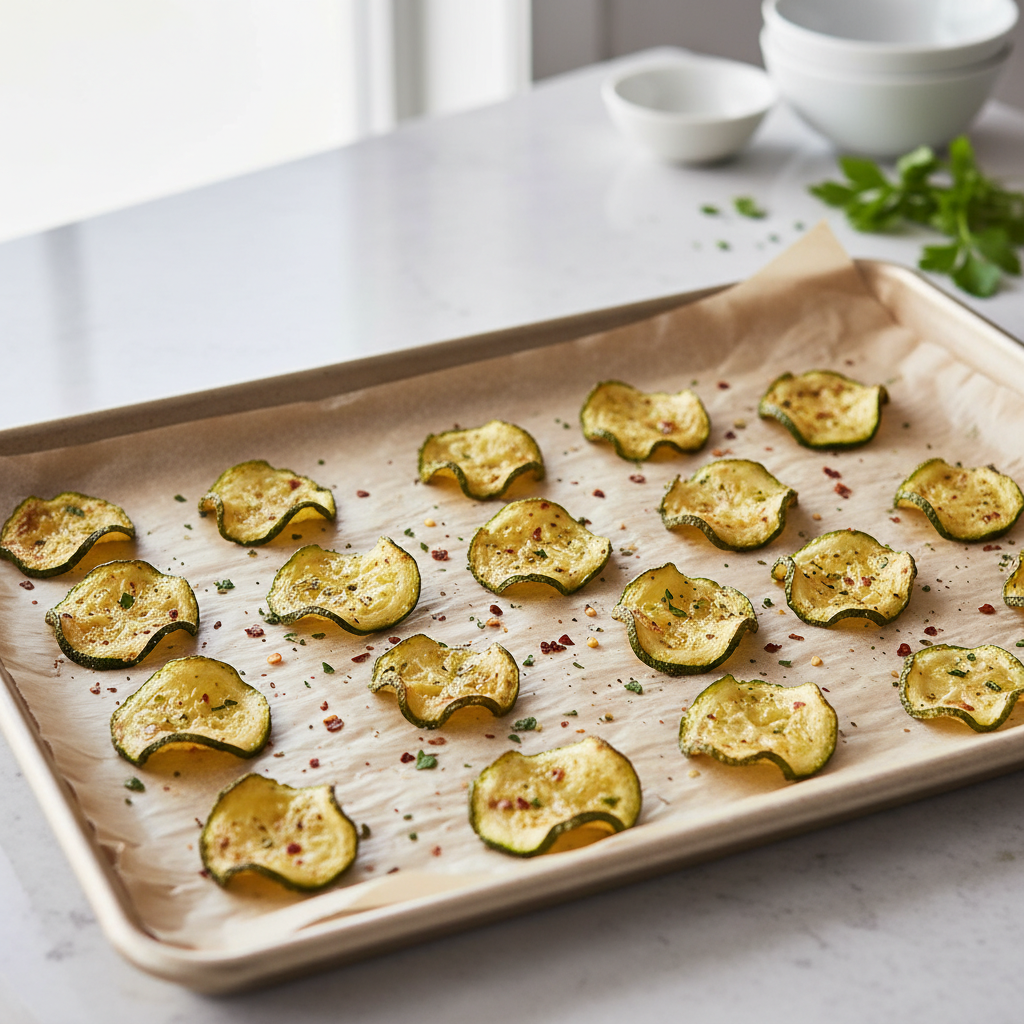
This guide focuses on what actually changes your results: how thin to slice, when to salt, how much oil is enough, and how to bake for crunch without burning. You’ll also get a quick troubleshooting table and a few seasoning paths that don’t taste “diet.”
Why baked zucchini chips often turn soggy (and how to fix the real cause)
Zucchini is mostly water. That’s the whole story, and also the whole challenge. When water can’t evaporate fast enough, slices steam instead of crisp.
- Slices are too thick or uneven: thick centers stay wet while edges over-brown. A mandoline helps consistency.
- Pan is crowded: close slices trap moisture, so you get steamed zucchini rounds.
- Salt timing is off: salting draws water out, which is good, but if you skip blotting you bake that water right back in.
- Not enough heat or air flow: low temps can dehydrate slowly, but many ovens run cool and create chew instead of crunch.
- Too much oil: a heavy pour can “fry-soften” and prevent surface drying; you want a light coat.
According to USDA FoodData Central, zucchini is naturally very low in calories and high in water content, which is why technique matters more than “healthy ingredients” when you want a crisp chip.
Quick self-check: are you set up for crispy zucchini chips?
Before you start, run through this short checklist. If you say “no” to two or more, that’s usually why batches disappoint.
- Do you have a way to slice 1/8-inch rounds fairly consistently (mandoline or steady knife work)?
- Do you have paper towels or a clean towel for blotting after salting?
- Will you bake in a single layer with visible space between slices?
- Do you have parchment or a silicone mat to reduce sticking (so you don’t flip early and tear slices)?
- Do you plan to cool chips on a rack so steam doesn’t soften them?
If you’re trying to do this on a crowded pan and “eyeballing” slice thickness, you can still get tasty results, but crispness becomes inconsistent.
How to make zucchini chips baked and actually crispy
This is the baseline method I’d give a friend who wants repeatable crunch without turning it into a fussy weekend project.
Ingredients (basic batch)
- 2 medium zucchini
- 1 to 2 tsp olive oil (or avocado oil)
- Salt (start light)
- Black pepper or your seasoning blend
Step-by-step method
- Slice: Cut into 1/8-inch rounds. If your zucchini is huge, consider half-moons so they dry faster.
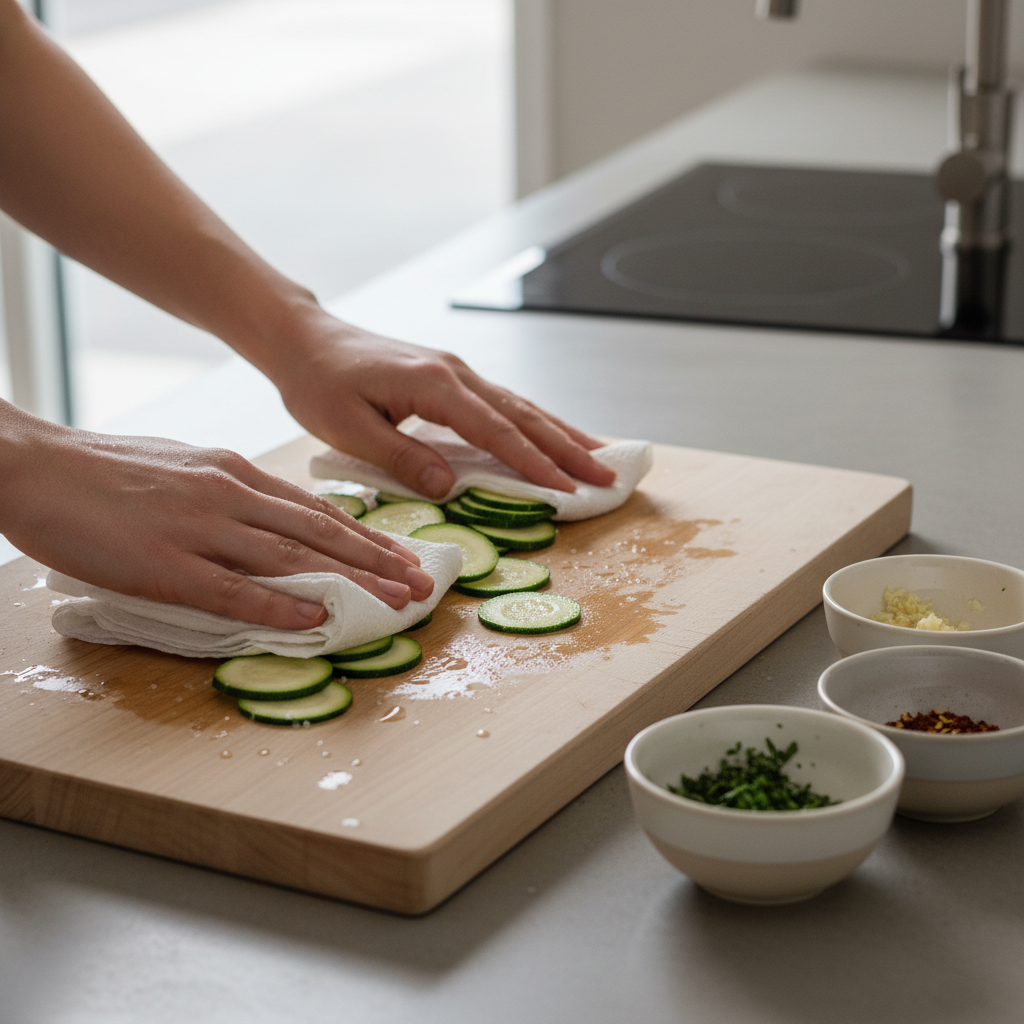
- Salt + rest: Lay slices on a towel, sprinkle lightly with salt, wait 10–15 minutes.
- Blot: Press with paper towels until the surface feels drier. This step looks boring, but it’s the crispness lever.
- Oil lightly: Toss with oil until just glossy. If you see oil pooling, you used too much.
- Arrange: Single layer on parchment, no overlap, give each slice a little breathing room.
- Bake: 225–250°F for 60–90 minutes, flipping once around the halfway point. Watch late-stage closely.
- Cool: Move to a rack for 10 minutes. They often crisp more as they cool.
Key point: lower oven temps dry more evenly, higher temps brown faster. If your oven browns aggressively, start at 225°F and be patient. If your oven runs cool, 250°F often behaves better.
Seasoning ideas that taste “snacky” without going overboard
Zucchini is mild, which is why it takes seasoning well, and why bland batches happen. Start with small amounts; concentrated powders can turn bitter when baked too hot.
- Classic savory: salt, pepper, garlic powder, pinch of smoked paprika
- Parmesan-style: fine grated parmesan + Italian seasoning (use a light hand, cheese can brown fast)
- Ranch-ish: dried dill, garlic powder, onion powder, tiny pinch of mustard powder
- Spicy: chili powder + cumin + pinch of cayenne
- Vinegar vibe: bake plain, then dust with vinegar powder or add a tiny squeeze of lemon after baking (wet toppings before baking soften chips)
If you’re watching sodium, remember that seasoning blends often hide a lot of salt. According to FDA guidance on sodium, many people benefit from paying attention to packaged seasoning mixes, so consider mixing your own with salt added separately.
Troubleshooting table: what went wrong and what to do next time
If your first try isn’t crisp, don’t toss the whole idea. Most problems map to one fix.
| Problem | Likely cause | Fix for next batch |
|---|---|---|
| Soggy centers | Too thick, not blotted, crowded pan | Slice thinner, blot after salting, leave space |
| Burnt edges, chewy middle | Oven too hot, uneven slices | Lower temp to 225–250°F, use mandoline |
| Sticking to pan | No parchment, flipping too early | Use parchment/silicone, flip later when set |
| Bitter taste | Overbrowned spices, very mature zucchini | Season lighter, bake lower/longer, choose smaller zucchini |
| Not “chip crunchy” | Still holding moisture | Extend bake 10–20 min, cool on rack, store uncovered until fully cool |
Health angle: are baked zucchini chips actually “healthy”?
In many cases, yes, especially compared with deep-fried snacks, but it depends on what you mean by healthy.
- Calories: zucchini is low-calorie, but oil and cheese add up quickly.
- Sodium: chips get “moreish” with salt, so portioning matters if you’re watching blood pressure.
- Fiber and volume: you get snack volume without the same starch load as potato chips, though fiber isn’t huge unless you eat a decent portion.
- Diet fit: works for many low-carb patterns, but individual needs vary, especially for people managing blood sugar or kidney issues.
If you have a medical condition or a specialized diet, it’s reasonable to check with a qualified clinician or dietitian, especially if sodium or potassium intake is a concern.
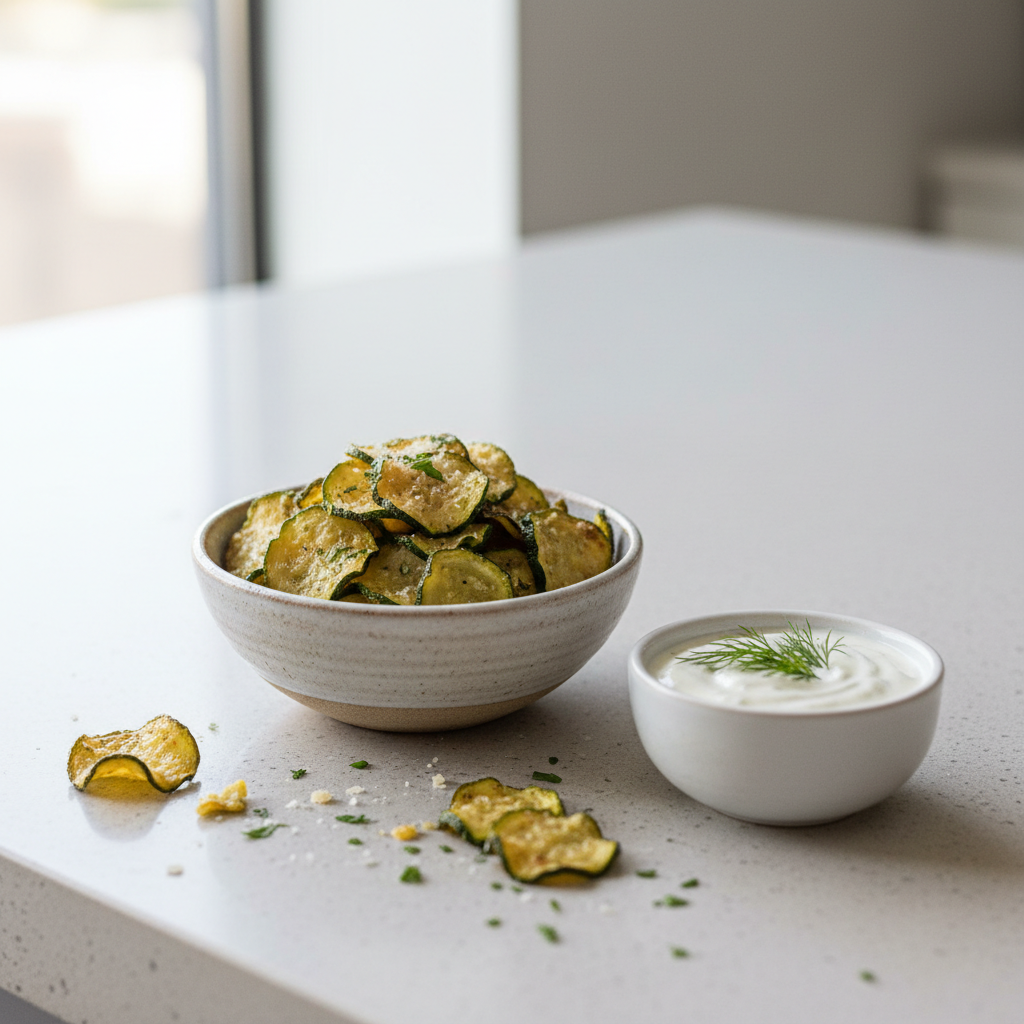
Storage and make-ahead tips (so they don’t soften overnight)
This snack is at its best the day you bake it. Zucchini keeps releasing moisture, so crispness fades faster than with potatoes.
- Cool completely on a rack before storing. Warm chips trapped in a container sweat.
- Short-term storage: keep loosely covered on the counter for a few hours if you want crunch.
- Overnight: store in an airtight container with a paper towel inside to absorb moisture.
- Re-crisp: 250°F for 5–10 minutes, then cool again on a rack.
One more practical note: if your goal is a lunchbox snack, these can work, but you may need to accept “pleasantly chewy” instead of “potato chip crisp.”
Key takeaways you can use on your next batch
- Blotting after salting matters more than adding extra bake time.
- Keep slices thin and consistent, uneven thickness creates mixed texture.
- Single layer spacing prevents steaming, even a little crowding changes everything.
- Cool on a rack if you want the best crunch from zucchini chips baked.
If you want to try this soon, pick one improvement to focus on, usually slice thickness or blotting, and your results jump quickly without changing the recipe.
FAQ
How thin should I slice zucchini for baked chips?
About 1/8-inch is a reliable target. Thicker slices can work, but they tend to land in “chewy snack” territory unless you bake much longer and manage moisture carefully.
Do I have to salt zucchini before baking?
Not mandatory, but salting helps pull out water so the oven can dry slices faster. If you salt, blot well; otherwise you just add moisture back onto the pan.
Why are my baked zucchini chips bitter?
Bitterness often comes from over-browned spices or very large, mature zucchini that can taste stronger. Try milder seasoning, lower heat, and smaller zucchini.
Can I make zucchini chips baked with no oil?
You can, and they’ll dry out, but they may taste flat and brown unevenly. A very light oil coat usually improves flavor and texture without turning it into a heavy snack.
Is convection (fan) better for baking zucchini chips?
Usually yes, because it increases airflow and evaporation. If you use convection, consider dropping the temperature slightly and start checking earlier to avoid over-browning.
How do I keep them crispy after baking?
Cool on a rack, then store only when fully cool. For leftovers, a quick reheat at low temperature helps, but they rarely stay perfectly crisp for days.
Can I use an air fryer instead of the oven?
Often yes, and it can crisp faster, but batches are smaller and it’s easier to over-brown. Keep slices uniform, don’t crowd, and check frequently near the end.
If you’re trying to make zucchini chips baked part of your regular snack rotation, a mandoline and one dependable seasoning blend make it feel effortless. And if you want an even more hands-off option, an air fryer approach can be simpler on busy nights, just plan on smaller batches and closer timing.