
how to cook sweet potato in microwave comes down to three things: pick the right size, vent the skin, and stop cooking once it turns tender all the way through.
If you’ve ever ended up with a sweet potato that’s hot on the ends but still firm in the middle, or one that “exploded” and splattered the microwave, you’re not alone. Microwaving is fast, but it’s less forgiving than baking if you skip a couple small steps.
This guide keeps it practical: a quick sizing chart, a reliable step-by-step method, a few “save it” fixes for common mistakes, and serving ideas that fit weeknights. No complicated gear, no pretending every microwave behaves the same.
What to know before you microwave a sweet potato
Microwaves heat food by exciting water molecules, so sweet potatoes cook from the inside out faster than an oven version. That speed is the upside, but it also means uneven heating shows up quickly when the potato is very thick or you don’t rotate it.
Safety note: you want steam to escape. If the skin stays sealed, pressure can build and the potato may burst. Poking holes is not optional.
- Best candidates: small-to-medium sweet potatoes, similar sizes if cooking more than one
- Texture expectation: fluffy and moist, but usually not as caramelized as oven-baked
- Flavor upgrade: finish with butter, salt, or a quick broil if you want browned edges
Quick time chart (by size) + how to tell when it’s done
Use this table as a starting point, then adjust. Microwave wattage, potato thickness, and how many you cook at once can shift timing.
| Sweet potato size | Approx. weight | Start time (1 potato) | What to check |
|---|---|---|---|
| Small | 4–6 oz | 4–6 minutes | Skin slightly wrinkled, yields to a squeeze (use a towel) |
| Medium | 7–9 oz | 6–8 minutes | Fork slides in with little resistance at the thickest point |
| Large | 10–12 oz | 8–11 minutes | Center feels soft, no hard core near the middle |
Doneness test that actually works: poke the thickest part with a fork or paring knife. If it meets resistance in the middle, cook in 45–60 second bursts.
Step-by-step: the most reliable microwave method
If you want the “set it and not regret it” approach, this is it. It stays simple and avoids the two big problems: dry edges and a firm center.
1) Wash, dry, and trim problem spots
Scrub under running water, then dry so it doesn’t steam-wet the skin. If there are soft or bruised areas, trim them out since they can cook oddly.
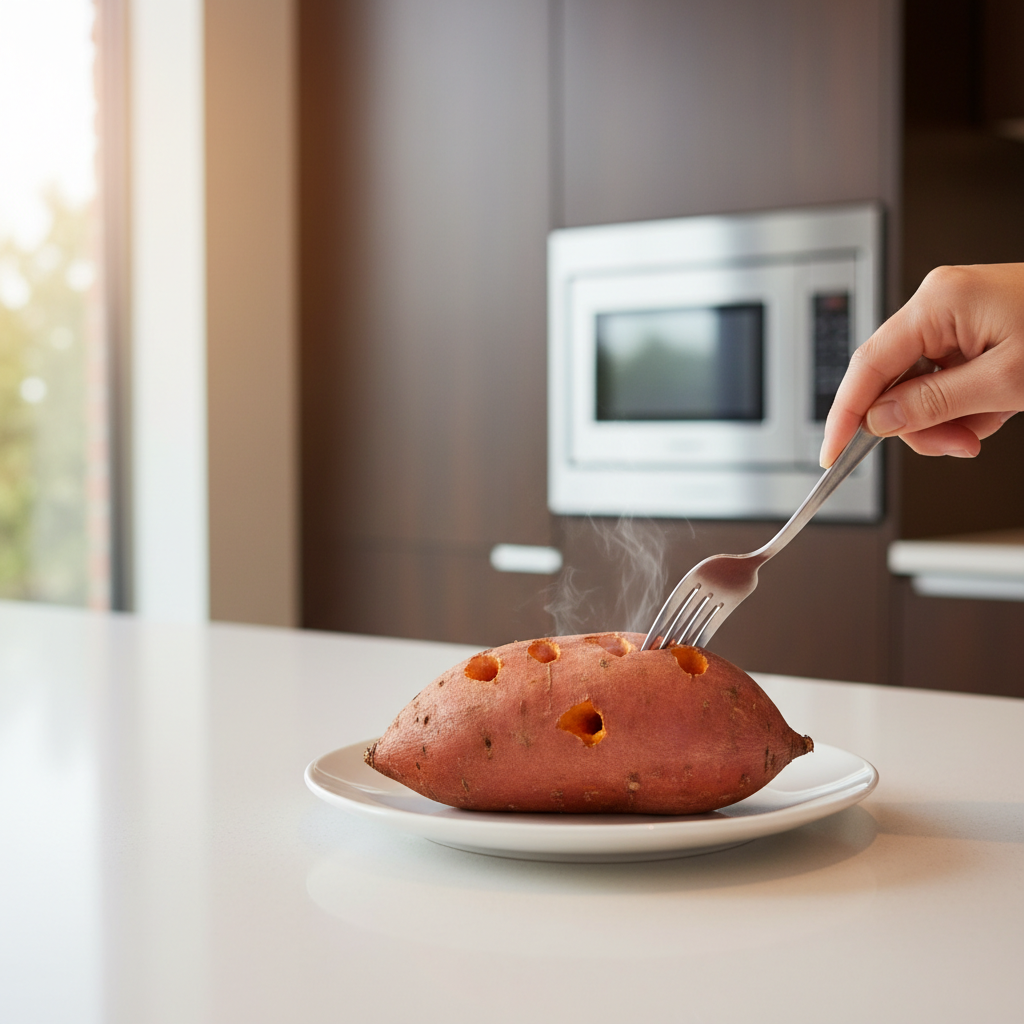
2) Vent the skin
Pierce 8–12 times with a fork, focusing on the thickest area. You’re creating steam vents, not decorative dots.
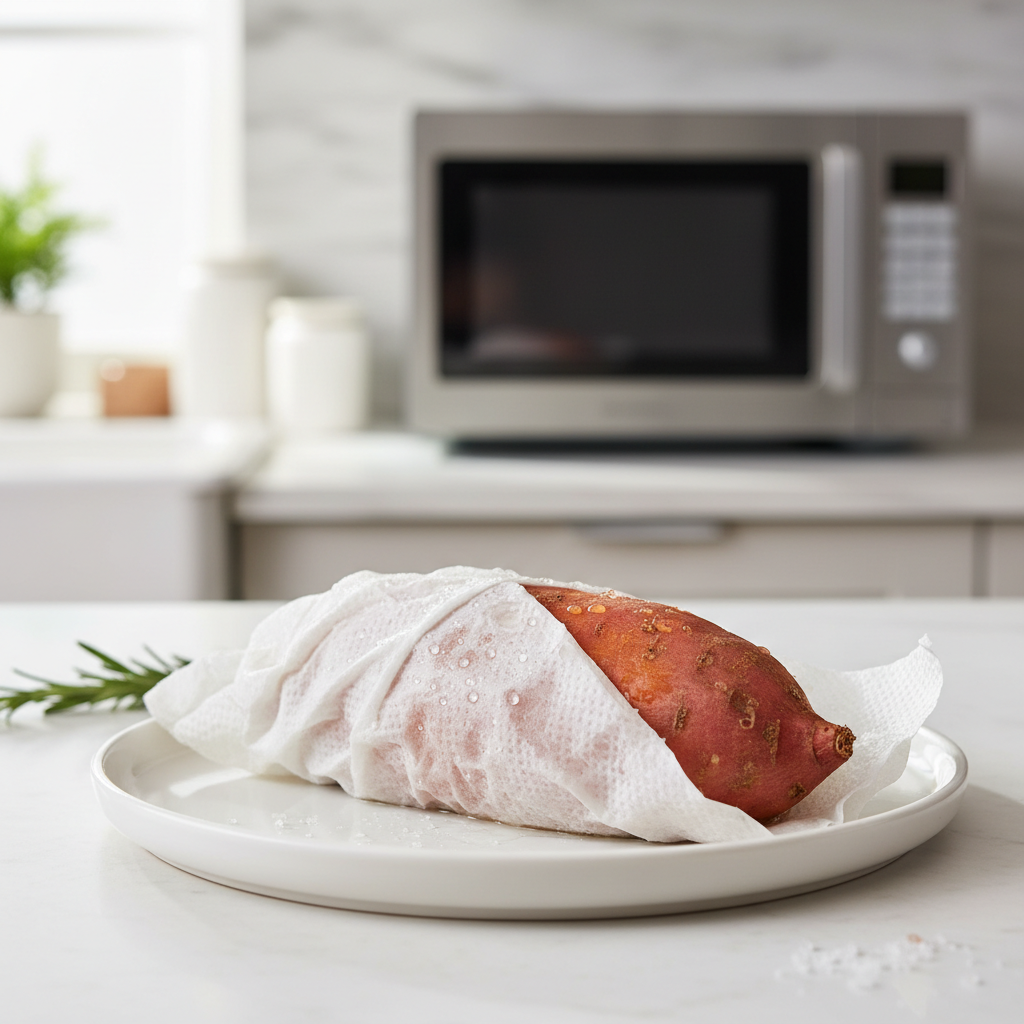
3) Choose your moisture strategy (two options)
- Damp paper towel wrap: Helps prevent dry spots, especially in higher-watt microwaves.
- No wrap: Slightly drier skin, sometimes a fluffier interior, but edges can overcook faster.
If you’re not sure, go with the damp paper towel. It’s the safer default.
4) Microwave, rotate, then finish in short bursts
- Place on a microwave-safe plate.
- Cook on High for half the estimated time, then rotate the potato 180 degrees.
- Continue cooking, then check tenderness at the thickest point.
- If needed, add 45–60 seconds at a time until tender.
Rest time matters: let it sit 2–3 minutes. The center keeps cooking from trapped heat, and the texture evens out.
Cooking more than one sweet potato (without guessing)
Microwaving multiple potatoes is convenient, but it slows cooking and increases uneven heat. The trick is spacing and staggering, not cranking time blindly.
- Keep sizes close: similar thickness cooks more evenly than similar length.
- Arrange in a ring: leave a little space between each potato, avoid stacking.
- Add time gradually: as a rough guide, two medium potatoes often need about 1.5x the single-potato time, but check early.
If one finishes early, pull it out and let the others continue. Overcooking to keep them “matching” is how you get gummy edges.
Common problems (and quick fixes that save dinner)
Most microwave sweet potato issues aren’t fatal, they just need a small correction.
- Hard center: Cut a lengthwise slit, microwave in 60-second bursts, and rest again. The slit lets steam reach the core.
- Dry or tough ends: Next time use a damp paper towel and rotate. For now, mash with butter or olive oil to bring back moisture.
- Watery interior: This can happen if the potato is very fresh and high-moisture, or if it’s wrapped too wet. Split it open and let steam escape for 2 minutes before topping.
- Potato “exploded”: Usually not enough vent holes, or it was cooked too long without checking. Clean the microwave once cooled, and next time poke more and shorten the first run.

Serving ideas and easy upgrades (sweet and savory)
A microwaved sweet potato is basically a blank canvas. What makes it feel “done” is the topping and a little seasoning, even if you keep it simple.
Fast savory options
- Butter + salt + black pepper, then a squeeze of lemon
- Greek yogurt + salsa for a quick loaded vibe
- Olive oil + chili flakes + feta
- Beans + shredded cheese, microwave 20–30 seconds to melt
Fast sweet options
- Cinnamon + maple syrup (go easy, it gets sweet fast)
- Peanut butter + banana slices
- Honey + a pinch of salt for balance
If you want a more oven-like finish, split it open, brush with a little butter, then toast under the broiler for 2–4 minutes. Watch closely, it can brown fast.
Food safety, storage, and reheating tips
Sweet potatoes are generally straightforward, but a couple habits reduce risk and keep texture better.
- Handle heat carefully: steam can burn when you open the paper towel or cut it open.
- Refrigerate leftovers promptly: if you’re unsure about safe holding time for cooked foods, According to USDA Food Safety and Inspection Service, perishable foods should not sit out more than 2 hours at room temperature (1 hour above 90°F).
- Storage: cool, then refrigerate in a sealed container for 3–4 days in many home kitchens.
- Reheat: cover and microwave in 30–45 second bursts. Add a small pat of butter or a splash of water if it reheats dry.
Key takeaways (so you can do it without rereading)
- Poke plenty of holes so steam escapes and you avoid bursts.
- Rotate halfway to reduce hot spots and a firm center.
- Use a damp paper towel if your microwave tends to dry foods out.
- Rest 2–3 minutes before cutting, texture improves a lot.
- Finish in short bursts instead of adding big chunks of time.
Conclusion: a fast sweet potato that still tastes right
Once you dial in your timing, how to cook sweet potato in microwave becomes a reliable weeknight move: vent the skin, cook in stages, and let it rest so the center catches up. If you want one simple action today, pick a medium potato, wrap it in a damp paper towel, and start checking at the 6-minute mark, you’ll learn your microwave fast.
If your goal is meal prep, cook a couple at once, refrigerate, and reheat with a little moisture and salt, it stays satisfying without extra work.